How Many Cups in a Pint, Quart, or Gallon? Conversion Chart
US liquid conversions: 2 cups in a pint, 4 in a quart and 16 in a gallon. Includes half-pints, recipe examples, and dry vs Imperial differences.
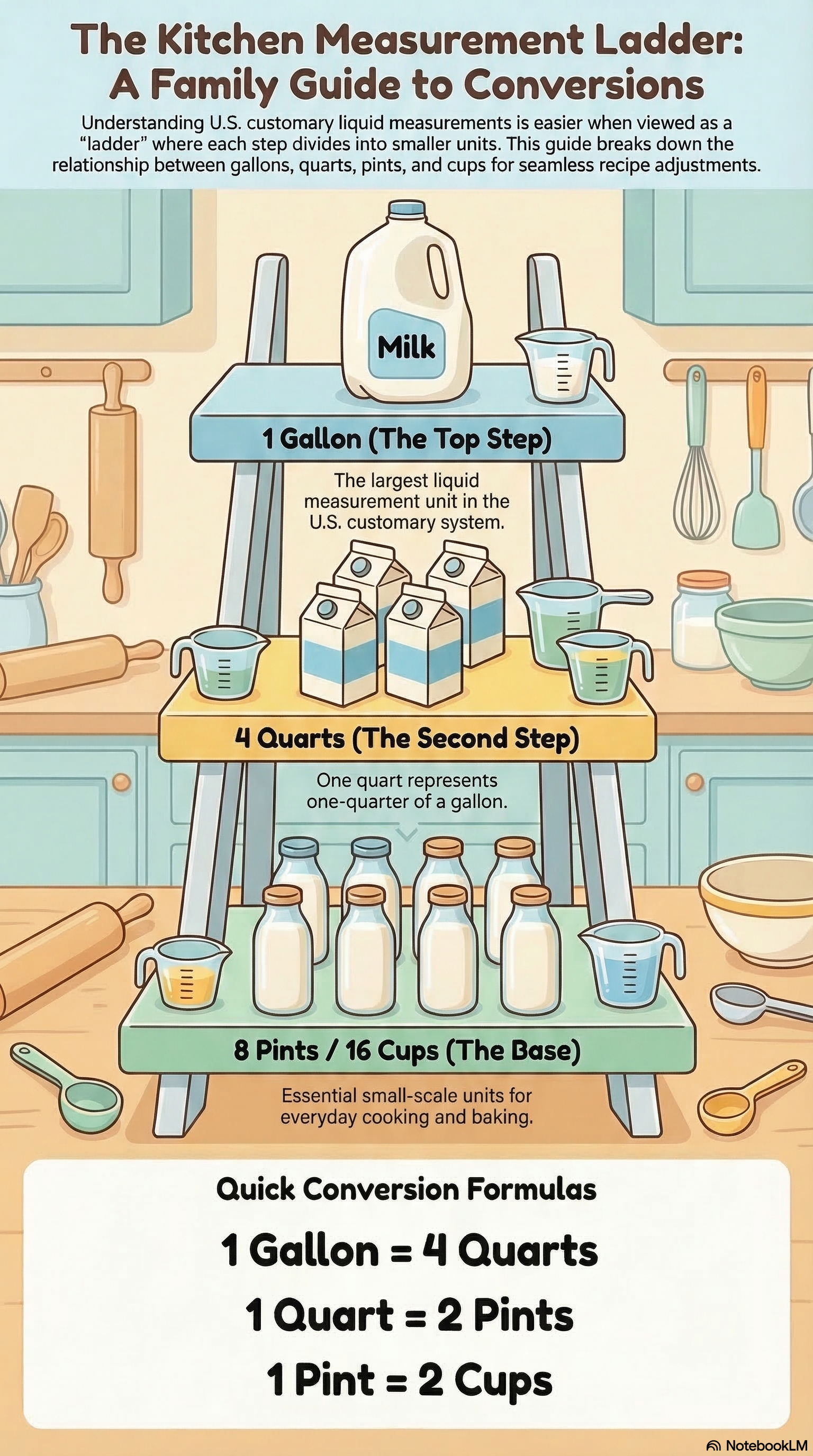
In US liquid measurements, 1 pint equals 2 cups, 1 quart equals 4 cups, and 1 gallon equals 16 cups. Half a pint is 1 cup. These are the conversions to use for milk, broth, water and other liquids in American recipes.
The important detail: a US dry pint and a British Imperial pint are different sizes. Check the recipe’s measurement system before using the chart.
US liquid measurement conversion chart
| Amount | US cups | US fluid ounces |
|---|---|---|
| Half pint | 1 | 8 |
| 1 pint | 2 | 16 |
| 1 quart | 4 | 32 |
| 2 quarts / half gallon | 8 | 64 |
| 1 gallon | 16 | 128 |
Reference: NIST household measurement equivalents. Fluid ounces measure volume; ounces on a kitchen scale measure weight.

How many cups are in a pint?
A US liquid pint contains 2 US cups. A half pint contains 1 cup. For example, a recipe calling for a pint of broth needs two 1-cup measures; half that recipe needs one.
How many cups are in a quart?
A US liquid quart contains 4 cups or 2 pints. If you have a quart carton of broth and use 3 cups, you have 1 cup left. Two quarts give you 8 cups.
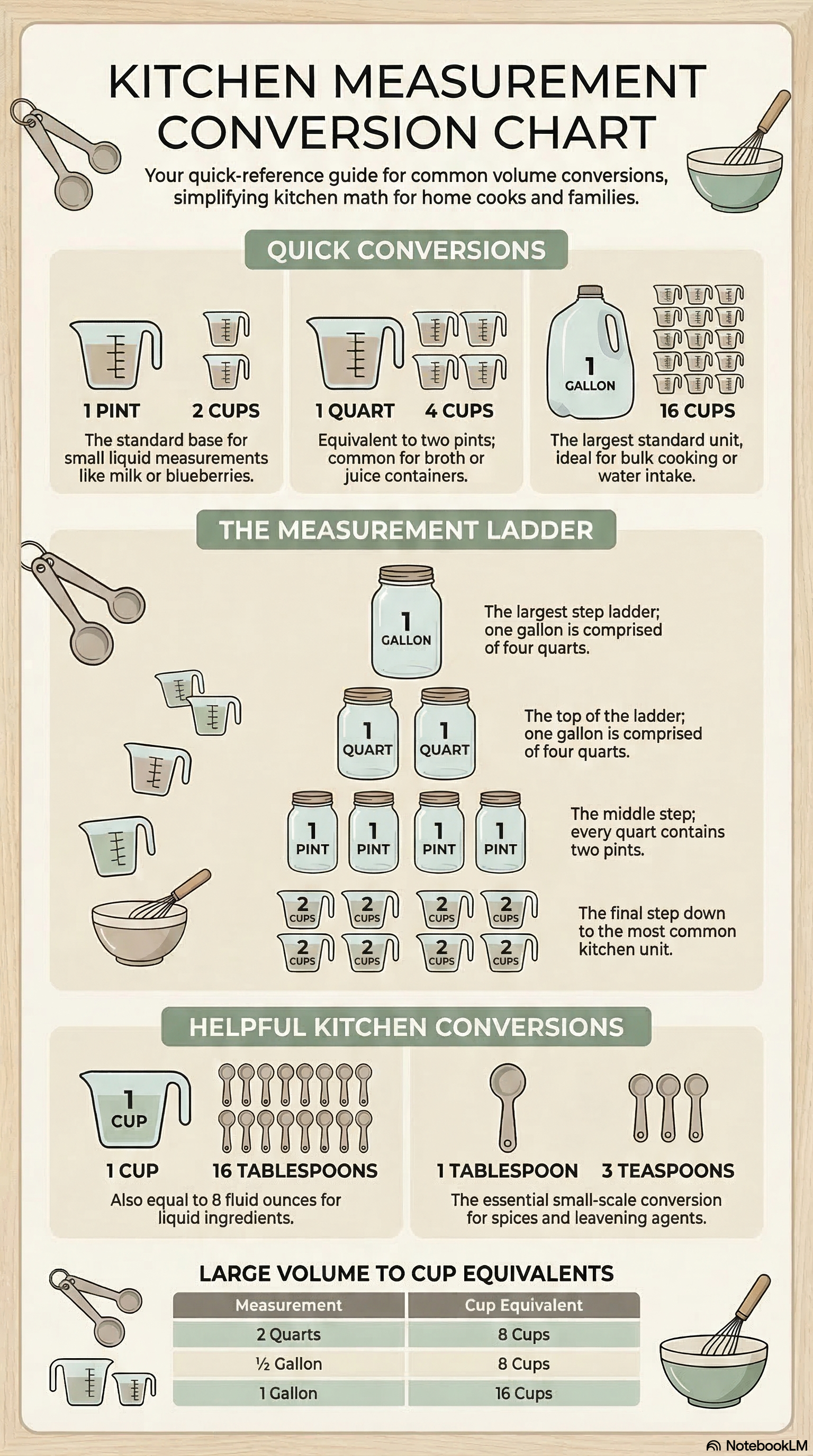
The conversion images on this page apply to US liquid measurements.
How many cups are in a gallon?
A US liquid gallon contains 16 cups, 8 pints or 4 quarts. A half gallon contains 8 cups; a quarter gallon contains 4 cups.
For a family gathering, one gallon of lemonade provides sixteen 1-cup portions before adding ice. If your glasses hold 2 cups, plan for eight portions instead.
 Colby
Colby
US liquid pint vs dry pint vs Imperial pint
- US liquid pint: about 473 mL, exactly 2 US cups.
- US dry pint: about 551 mL. Produce containers labeled by dry volume do not follow the two-cup liquid-pint rule.
- British Imperial pint: about 568 mL, roughly 2.4 US cups.
These are different units, not different ways of filling the same cup. See NIST’s unit tables. A metric cup may also mean 250 mL, so use the units specified by your recipe.
Liquid vs dry ingredients: what actually changes?
A US measuring cup holds the same volume whether you fill it with water or flour. But a cup of flour does not weigh the same as a cup of water. Do not convert “8 fluid ounces” into “8 ounces by weight” for every ingredient.
Use a liquid measuring jug on a level surface for liquids and the recipe’s stated filling method for dry ingredients. If a baking recipe supplies grams, weighing the ingredient avoids differences caused by packing or scooping. NIST recommends measuring by weight for better recipe accuracy.
A simple measurement lesson for kids
Put a tray under a quart-sized container. Let your child pour in one cup of cool water at a time and count to four. Then ask how many more cups would fill a second quart. This turns the chart into something they can see.
Halving and doubling a recipe
- A recipe needs 1 pint of milk: use 2 cups. Halve it to 1 cup; double it to 4 cups.
- A recipe needs 1 quart of broth: use 4 cups. Halve it to 2 cups; double it to 8 cups.
- A recipe needs 3 cups: half is 1½ cups and double is 6 cups.
For smaller amounts, 1 US cup equals 16 tablespoons, and 1 tablespoon equals 3 teaspoons. Keep the same measuring system throughout the recipe.
Want a reference to keep in the kitchen? These kitchen measurement printables offer a handy companion.
 Colby
Colby
Frequently Asked Questions
How many cups are in half a gallon?
Half a US liquid gallon contains 8 US cups.
How many cups are in two quarts?
Two US liquid quarts equal 8 US cups.
Is 4 cups equal to a quart?
Yes. Four US cups equal one US liquid quart.
How many cups are in a pint of milk?
One US liquid pint of milk contains 2 US cups.
How many cups are in a gallon of water?
One US liquid gallon of water contains 16 US cups.
How many cups are in a half pint?
Half a US liquid pint equals 1 US cup, or 8 US fluid ounces.
Is a pint of blueberries the same as two cups?
Not necessarily. A US dry pint is about 550.6 mL, larger than a US liquid pint. Measure the berries in a measuring cup when your recipe specifies cups.