

On this page
Why Is My Husband Yelling at Me? (And What You Can Do About It)
If you’ve found yourself thinking “my husband yells at me” or “why is my husband yelling at me?” — you’re not alone.
And more importantly… you’re not wrong for feeling hurt by it.
Everyone deserves respect in a relationship. Period.
Understanding why your husband is yelling at you can help you figure out what to do next — but it’s just as important to recognize how it affects you and where to draw the line.
💡 What to Do If Your Husband Yells at You (Quick Answer)
If your husband yells at you, try to stay calm, avoid escalating the situation, and create space if needed. Address the issue later when emotions have cooled down, clearly communicate how it made you feel, and set boundaries around respectful communication. If the yelling becomes frequent or makes you feel unsafe, it may be time to seek outside support or counseling.
❤️ Real Talk (From a Husband & Dad)
As a husband and dad, I’ll be honest — there have been moments where I’ve raised my voice. But there’s a difference between a bad moment… and a bad pattern.
Yelling shouldn’t be how we handle the people we love.
If it’s happening often, something deeper is going on — and it needs attention.
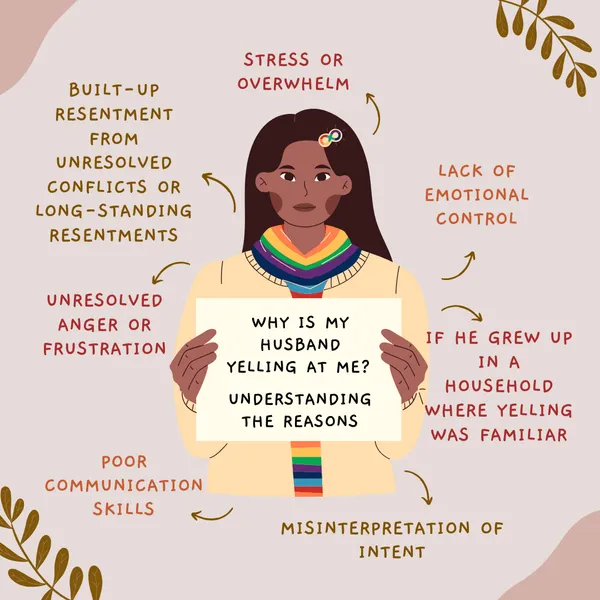
Why Is My Husband Yelling at Me?
There’s usually a reason behind the behavior — but let’s be clear:
👉 Understanding it doesn’t excuse it.
Here are some of the most common reasons husbands yell:
Stress or Overwhelm
One of the most common reasons a husband yells is stress.
Work pressure, financial struggles, parenting responsibilities, or just the weight of everyday life can build up. When that stress has nowhere to go, it can come out as yelling.
That doesn’t make it right — but it helps explain the behavior.
Unresolved Anger or Frustration
Sometimes yelling has nothing to do with you directly.
Unresolved issues — whether from the relationship or outside of it — can build over time. That frustration sits under the surface until it finally comes out as shouting.
Poor Communication Skills
Not everyone knows how to communicate emotions in a healthy way.
If your husband feels unheard or doesn’t know how to express himself clearly, yelling may become his default way of being heard.
Again — not acceptable, but something that can be worked on.
Learned Behavior
Some people grow up in households where yelling is normal.
If conflict was handled through shouting growing up, it can carry into adult relationships. For some, it’s not intentional — it’s just what they’ve always known.
The good news? Learned behavior can be unlearned.
Feeling Unheard or Disconnected
Sometimes yelling is a sign that someone feels ignored or dismissed.
Instead of communicating that feeling calmly, it comes out louder and more aggressive.
Deeper Emotional or Mental Health Issues
Anxiety, depression, burnout, or unresolved trauma can all impact how someone reacts in stressful situations.
If the yelling feels intense, frequent, or unpredictable, there may be something deeper going on.
Is It Normal for a Husband to Yell?
Short answer: No — not as a pattern.
Every couple argues. Every couple has moments.
But constant yelling?
That’s a problem.
There’s a big difference between:
- A heated moment
- A repeated behavior that creates fear, stress, or anxiety
The Emotional Impact of Yelling
Mental and Emotional Toll
When your husband yells at you, it can leave you feeling:
- Anxious
- Hurt
- Disrespected
- Like you're walking on eggshells
Over time, that takes a serious toll.
Loss of Trust and Connection
Yelling doesn’t just hurt in the moment — it slowly damages the relationship.
It breaks trust. It creates distance. It makes communication harder instead of better.
When Yelling Becomes Emotional Abuse
There’s a line — and it matters.
Yelling may be crossing into emotional abuse if it includes:
- Name-calling
- Intimidation
- Blame-shifting
- Making you feel small or afraid
If that’s happening, it’s important to take it seriously.
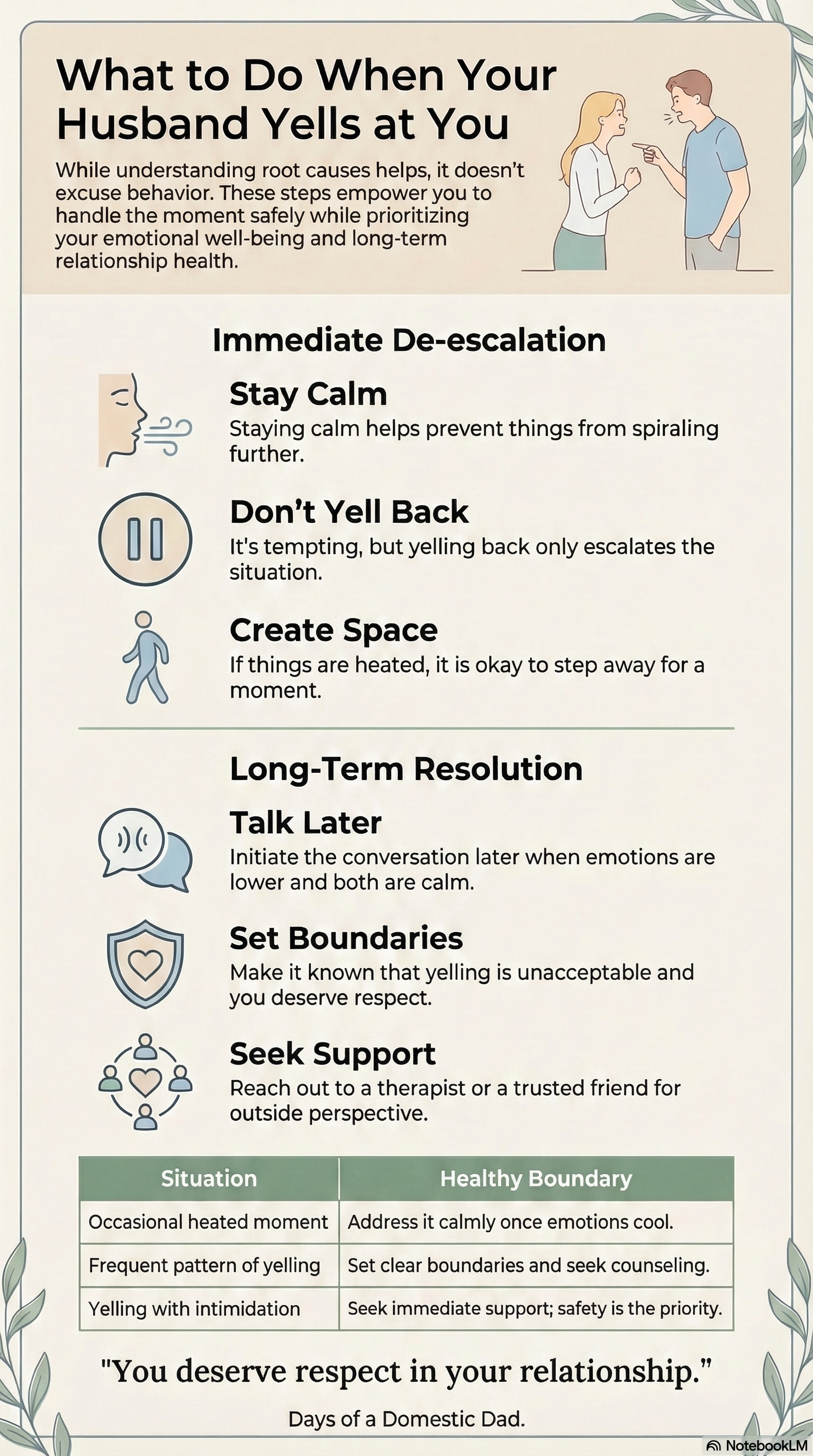
What to Do If Your Husband Yells at You
This is where you take your power back.
1. Don’t Match the Energy
It’s tempting to yell back — but that only escalates things.
Staying calm helps prevent things from spiraling further.
2. Create Space in the Moment
If things are heated, it’s okay to step away.
You can say:
“I’m willing to talk about this, but not while we’re yelling.”
3. Address It Later (When Calm)
Have the conversation when emotions are lower.
Focus on how it made you feel:
- “It hurts me when you raise your voice.”
- “I don’t feel respected when you yell.”
4. Set Clear Boundaries
This is huge.
Let it be known:
👉 Yelling is not acceptable in your relationship
Boundaries aren’t about controlling him — they’re about protecting yourself.
5. Encourage Better Communication
Work toward:
- Calm conversations
- Listening without interrupting
- Expressing frustration without attacking
6. Protect Your Mental Health
If this is happening often, you need support too.
Your well-being matters just as much as the relationship.
Frequently Asked Questions
Why does my husband yell at me?
Your husband may yell due to stress, frustration, poor communication skills, or deeper emotional issues. While these factors may explain the behavior, they do not justify it.
What do I do if my husband screams at me?
Stay calm, avoid escalating the situation, and address it later when things are calm. Set clear boundaries and seek support if the behavior continues.
Is yelling in a relationship normal?
Occasional arguments are normal, but frequent yelling is not. It can damage trust and create an unhealthy environment.
Why does my husband get angry so fast?
Quick anger can be linked to stress, emotional triggers, or difficulty managing emotions. It may also stem from learned behavior or unresolved issues.
Can yelling ruin a relationship?
Yes. Over time, constant yelling can break down trust, communication, and emotional safety.
Resources for Help and Support
If you’re dealing with constant yelling or emotional distress, support is available:
- National Domestic Violence Hotline – https://www.thehotline.org/
- BetterHelp Online Therapy – https://www.betterhelp.com/
- American Psychological Association – https://www.apa.org/
- National Alliance on Mental Illness – https://www.nami.org/
Knowing When to Seek Help
If yelling becomes frequent, controlling, or emotionally damaging, it’s time to take it seriously.
You don’t have to handle it alone.
Talk to:
- A therapist
- A trusted friend or family member
- A support group
Final Thoughts
Yelling is not something you should have to accept as “just the way things are.”
Understanding why your husband yells can help — but protecting your peace matters more.
Healthy relationships are built on respect, communication, and emotional safety.
Call to Action
If your husband yells at you regularly, consider speaking with a counselor or therapist.
You deserve to feel heard, respected, and safe in your relationship.