


Becoming an electrician might seem like an easy job. Isn't it? Did you know that if you want to excel in this career option, you must have a solid grasp of mathematics?
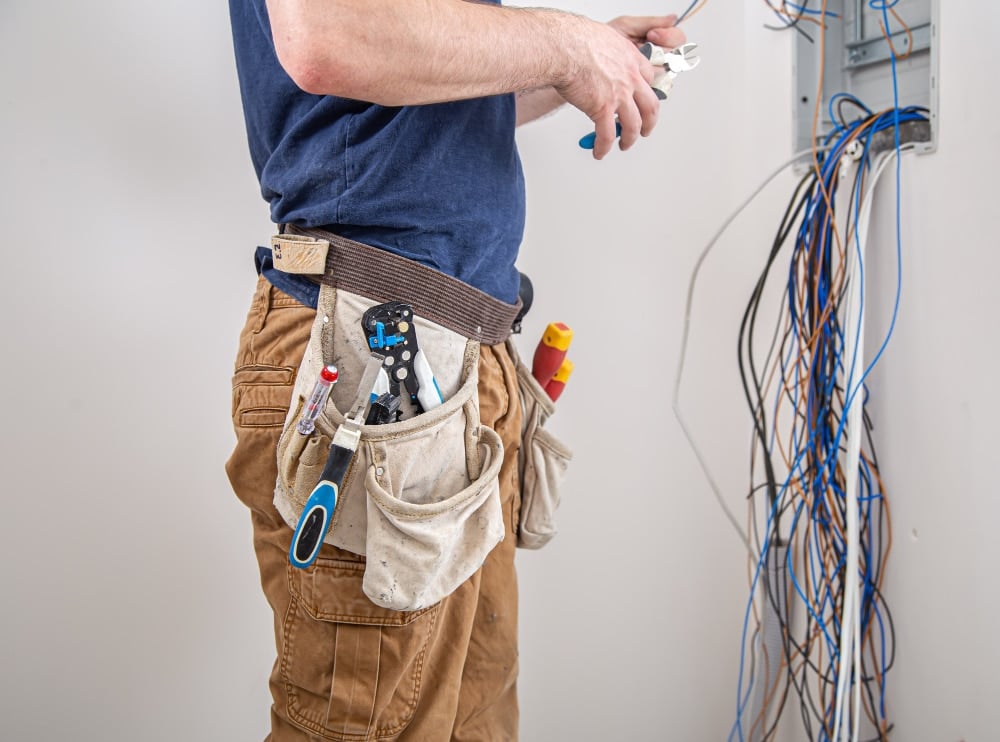
How To Become an Electrician
Yes, you heard it right! You must have a good understanding of sums, geometry, and algebra to prevent yourself from miscalculations that might result in hazardous outcomes. Not only that, most electrician training programs require you to be well-versed with the Grade 12 Maths course.
To those who are still planning to become an electrician, here's what you need to know regarding the practical application of maths.
Physical Applications of Maths in An Electrician Job
Before continuing your career as an electrician, you must have come across certain thoughts: how to become an electrician, what certifications are required for it, and more. For now, let's talk about different options where mathematics can help to do a good job.
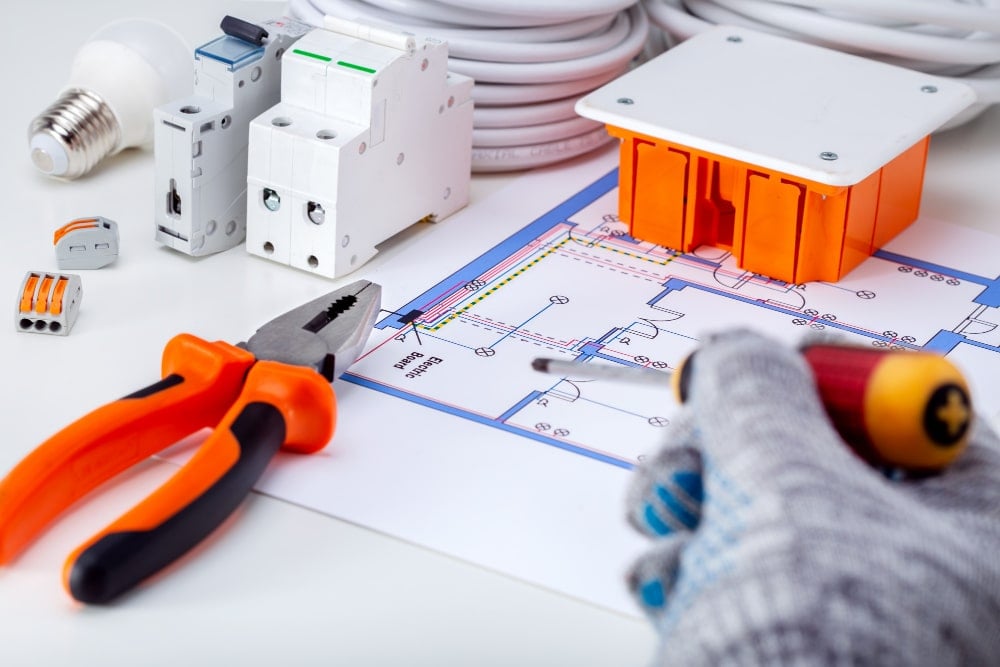
For measurements and calculations
Electricians will have to measure room dimensions, wiring lengths, and other variables to best detect the places for various component placements.
To begin with the measurements, electricians might use addition, subtraction, and simple algebraic linear functions. Mathematical accuracy ensures the safety and regulatory compliance. While some calculations can be easy, others can be done simply using a calculator. Some equations truly require a good knowledge of the relevant mathematical discipline.
For instance, Algebra is used throughout the electrical installation or repair process. Maths is necessary for all electrical projects. Thus, the study of maths is one of the most critical perspectives in an electricians' life.
Piping configuration
Once initial measurements are done, an electrician will have to shift on more complex things to determine the correct angles of pipes and circuits. For this, there is a requirement of knowledge regarding geometry or trigonometry principles.
Geometric principles are crucial to check correct wire configuration if the wires need to be parallel to each other or sit at a specific angle. Moreover, geometry is also used whenever electricians draw up blueprints or building plans.
Creating scale representations of any fine structure requires the understanding of geometric principles and applications. These plans may also be of significant relevance for other contractors, so accuracy is anyway essential.