
Replacing Most or All Teeth in Scottsdale, Arizona: Guide to Planning, Healing, and Care

Why Full-Arch Tooth Replacement Requires Careful Planning
When many teeth are missing or failing, everyday tasks such as chewing, speaking, and smiling can become more difficult. For Scottsdale residents considering full arch implants Scottsdale AZ, the most useful first step is a complete evaluation that looks beyond the appearance of the teeth alone.
Key Takeaways
- Replacing an entire dental arch is a personalized process that begins with diagnosis, not a one-size-fits-all procedure.
- Healthy, natural teeth should be preserved when they can be predictably treated and maintained.
- Gum health, bone condition, bite, medical history, lifestyle, and home-care habits all affect planning.
- Temporary teeth, healing visits, and long-term maintenance are often important parts of treatment.
- Fixed bridges, removable dentures, and implant-retained dentures each have different benefits and care needs.
A full-arch plan may affect the gums, jawbone, bite, facial support, and daily cleaning routine for years to come. Whether a person spends weekends hiking the McDowell Sonoran Preserve, dining with friends in Old Town, or simply wants to eat more comfortably at home, the goal should be a stable, maintainable solution that fits their health needs and expectations.
Implants are one possible treatment option, not an automatic answer for every damaged tooth. The range of treatment options available based on a dentist's diagnosis may include restorations, crowns, bridges, dentures, or implants. Asking for a second opinion can be appropriate when a recommendation involves removing multiple teeth.
Who May Benefit From Full-Arch Treatment?
Full-arch treatment may be considered when a patient has multiple missing teeth, teeth weakened by repeated decay or fractures, advanced gum problems, or dentures that move and create sore areas. It can also be relevant when repeated repairs no longer provide dependable comfort or function.
However, these concerns alone do not determine candidacy. A dental professional must assess whether individual teeth can be restored, whether infection is present, and whether a larger replacement plan is appropriate.
What a Candidacy Evaluation Should Cover
A thorough consultation should review the condition of the mouth as well as the person's overall health and goals.
- Gum health: Active infection and untreated gum disease may need care before replacement teeth are placed.
- Jawbone condition: Bone volume and anatomy can influence whether implants are appropriate and where they may be positioned.
- Medical history: Health conditions and medications can affect surgical planning and healing.
- Tobacco or nicotine use: Nicotine exposure should be discussed because it can complicate healing concerns.
- Bite and grinding: Clenching or grinding may influence the material, design, and protective measures recommended.
- Home care: Replacement teeth need regular cleaning, including access beneath or around the restoration.
- Personal priorities: Comfort, appearance, speech, treatment time, and budget deserve a direct conversation.
Why Saving Natural Teeth Still Matters
A tooth should not be removed simply because an implant is available. Teeth with a favorable outlook after periodontal treatment, root canal therapy, or restorative treatment may remain valuable. Patients can ask which teeth are likely to be maintainable, which have a poor long-term outlook, and why removal is being considered.
Fixed and Removable Replacement Options
There is no universal "best" replacement for every Scottsdale patient. Comparing options before treatment helps clarify the practical tradeoffs.
- Traditional removable dentures: These are removed for cleaning and generally rest on the gums.
- Implant-retained dentures: These removable appliances connect to implants for added stability.
- Fixed implant-supported bridges: These connected replacement teeth are secured to implants and are removed only by a dental professional when necessary.
- Staged treatment: Gum therapy, extractions, grafting, or a healing period may be needed before the final teeth are delivered.
Patients should compare cleaning requirements, speech, comfort, repair needs, treatment stages, future maintenance, and total expected costs rather than focusing on a single feature.
How Digital Planning Supports Treatment
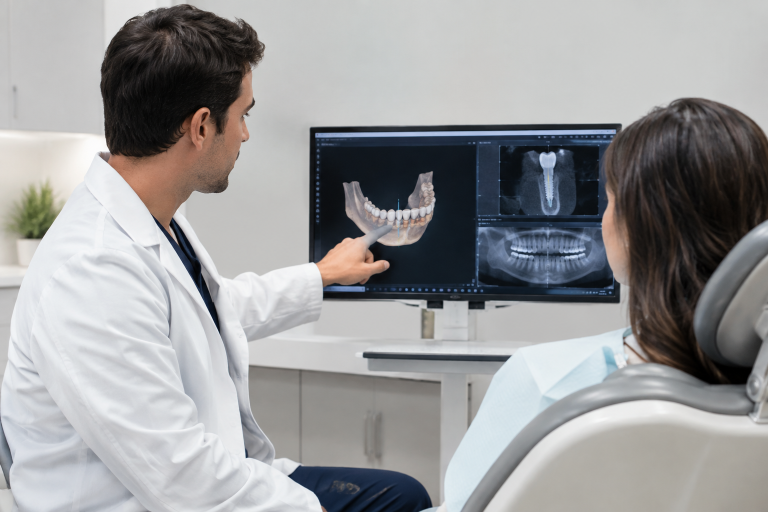
Digital imaging, photographs, scans, and bite records can help the treatment team study the jaw and plan the intended position of the replacement teeth. Good planning connects surgery with the final restoration, including bite forces, facial support, speech, and access for hygiene.
The Main Treatment Stages
- Consultation and diagnosis: Review oral health, medical history, goals, alternatives, and anticipated costs.
- Imaging and design: Evaluate bone, gums, bite, and the proposed tooth shape.
- Preparatory treatment: Complete necessary gum care, extractions, or bone development.
- Implant placement: Place implants according to the individualized plan.
- Temporary teeth: Provide a provisional restoration when appropriate during healing.
- Monitoring and final restoration: Check healing and stability before delivering the planned long-term teeth.
What Recovery May Feel Like
Early recovery can involve tenderness, swelling, dietary changes, and an adjustment period for speech. Healing timelines vary, and temporary teeth may need refinements as tissues recover. Following written post-treatment instructions and attending follow-up visits gives the dental team an opportunity to identify concerns promptly.
Daily Care After Treatment
Implant-supported teeth are not maintenance-free. Brushing twice daily, cleaning beneath and around the restoration with recommended tools, and keeping hygiene visits are central to protecting the gums and implants. The maintenance guidance for full-arch implant restorations also emphasizes professional recall care and monitoring for biological or mechanical concerns.
Patients should report bleeding, swelling, drainage, persistent discomfort, looseness, cracks, chips, a bite change, or difficulty cleaning under the restoration. These signs should be evaluated rather than ignored.
Questions to Ask Before Treatment
- Which natural teeth can be saved, and which have a poor outlook?
- What alternatives are reasonable for my situation?
- Will I have temporary teeth while healing?
- Could I need gum treatment, extractions, or grafting?
- How will I clean the replacement teeth at home?
- What services and future repairs are included in the quoted cost?
- Who will provide surgery, restoration, maintenance, and emergency care?
How to Compare Providers
Choose a provider who explains alternatives and risks in plain language, reviews diagnostic records with you, and provides a written fee breakdown. Before making an irreversible decision, ask how maintenance, repairs, complications, and referrals will be handled. A careful plan should support both the day of treatment and the years of care that follow.
Conclusion
Replacing most or all teeth can improve function and comfort, but success depends on thoughtful diagnosis, realistic expectations, and consistent maintenance. Scottsdale patients who understand tooth-preservation options, treatment stages, healing needs, and long-term care are better prepared to choose a plan that supports their oral health and daily life.