
Italy is a country that seems to live in everyone’s imagination. The Colosseum, Venice’s gondolas, Florence’s Renaissance treasures, and the golden hills of Tuscany are etched into travel dreams long before your plane lands. Yet the real soul of Italy often lies beyond those well-worn highlights.
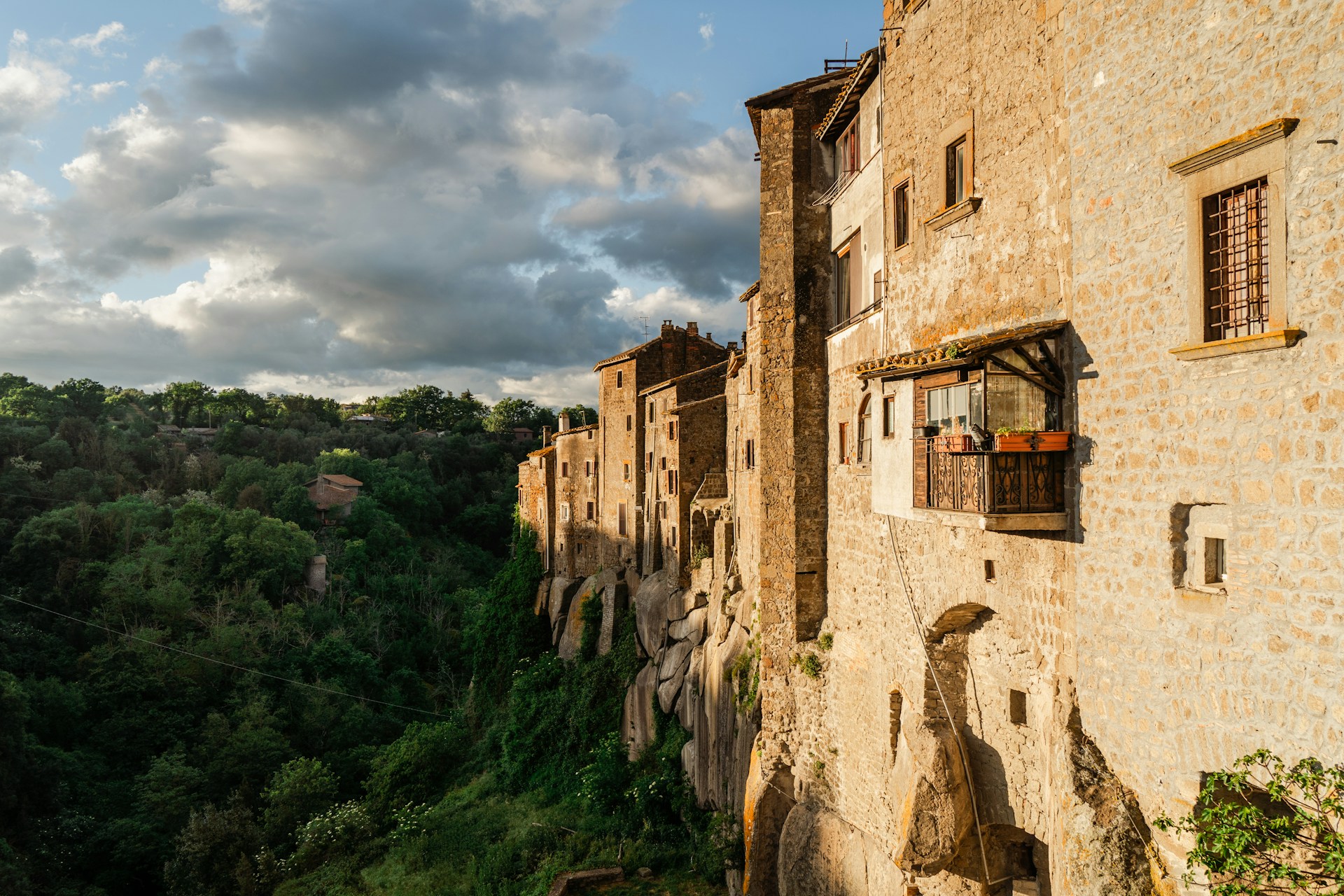
Wander away from the big cities, and you’ll stumble upon quiet towns, secluded coastlines, and ancient traditions that carry a different kind of magic — the kind that feels personal, like you’ve uncovered a secret.
Slow Travel: Italy Seen by Train
Thankfully, Italy makes this easy. Its rail network flows like veins through the country, connecting not only the famous hubs but also the places in between. Take the train from Rome to Venice, and you’ll glide past landscapes dotted with vineyards, sleepy villages, and hilltop fortresses. Resist the urge to rush to your destination, and you’ll discover that Italy’s greatest wonders often sit quietly between the icons.
The Forgotten Hill Towns of Lazio
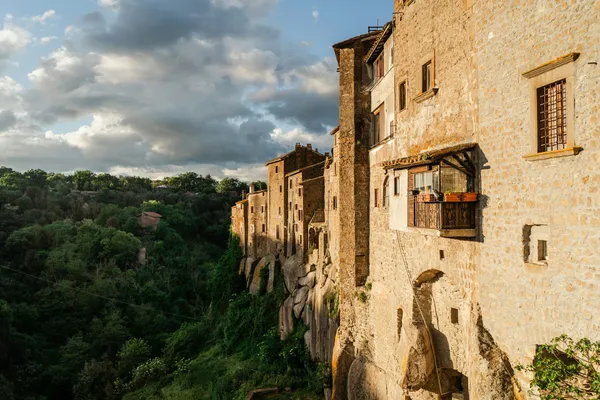
In Lazio, Rome dominates the headlines, yet an hour away, a gentler world unfolds. Civita di Bagnoregio is perched on a crumbling plateau, reachable only by a footbridge. Known as the “dying city,” its streets are almost too quiet, as though time itself is holding its breath. Standing there, gazing at the valleys below, you feel both the fragility and the endurance of Italy’s history.
Not far away, Calcata offers a burst of life in contrast. Once abandoned, it was claimed by artists who turned its medieval streets into galleries and studios. Today, you’ll hear laughter spilling from cafés, see sculptures tucked into doorways, and feel the buzz of creativity all around. These little towns remind you that Lazio is more than Rome’s ruins — it’s living, breathing heritage.
Tuscany’s Hidden Corners
Tuscany rarely hides, yet even here, secrets remain.Pienza, built as an “ideal city” of the Renaissance, still lives up to its vision. Its cobbled streets open onto sweeping views of the Val d’Orcia — fields, olive groves, and cypress trees stretching to the horizon. Unlike Florence or Siena, here you might find yourself alone with the landscape, breathing in silence that feels timeless.
Travelling between these places is a joy in itself. The train from Florence to Rome slices through countryside stitched with vineyards and olive groves. From your seat, you glimpse villages perched on hills, and for a moment, you imagine stepping off to explore each one. Even the journey becomes a discovery.
Umbria’s Green Heart
Neighbouring Tuscany often takes the glory, but Umbria holds a quiet confidence. Spello’s lanes burst with flowers, pots of geraniums and bougainvillaea overflowing from stone balconies. Visit during the Infiorata festival and you’ll find the streets transformed into carpets of petals, designed with intricate devotion.
Gubbio, with its medieval towers and sweeping valley views, feels like a town from a storybook. Its Corsa dei Ceri festival, part race and part ritual, thunders through the streets each spring, binding the community in tradition. And in the evening, when the bells toll and the sun slips behind the hills, Umbria slows into a rhythm you can’t help but fall into: long meals, local wine, and conversations that stretch late into the night.
The Quiet Coastlines of Le Marche
On Italy’s eastern shore, Le Marche offers a coastline that still feels undiscovered. Along the Conero Riviera, limestone cliffs plunge into turquoise waters, hiding coves that reward those who walk the extra mile or take a boat to reach them. On beaches like Sirolo and Numana, the only soundtrack is the sea itself.
Further inland, Urbino reveals another layer of Italy’s richness. Raphael’s birthplace, the town retains the elegance of its Renaissance heyday. Climb its winding streets and you’ll find sweeping views, terracotta rooftops glowing in the evening sun. Unlike Florence, there are no throngs of tourists jostling for space — only a calm, quiet grandeur that feels all the more special for its solitude.
Basilicata: Italy’s Best-Kept Secret
Few regions remain as overlooked as Basilicata, and yet its treasures rival anywhere in Italy. Matera’s cave dwellings, the Sassi, once symbols of poverty, now shine as UNESCO-protected wonders. Staying in one of its converted cave hotels, candlelight flickering across stone walls, feels like sleeping inside history itself.
Elsewhere, Craco lies abandoned on its hillside, its empty windows gazing silently across the landscape. It’s eerie, beautiful, and haunting all at once. By the sea, Maratea is utterly different — lively squares, pastel-coloured houses stacked above the water, and a towering Christ statue keeping watch from the cliffs. Basilicata is proof that Italy still has secrets waiting for those willing to look.
Emilia-Romagna’s Culinary Soul
If food is your compass, Emilia-Romagna is the place it will lead you. Bologna hums with the smell of simmering ragù, its trattorias serving the original version of what the world knows as Bolognese. Markets brim with wheels of cheese, freshly made pasta, and towers of mortadella, and every bite feels like a celebration of tradition.
Venture further and you’ll find Modena, where balsamic vinegar is aged for decades, each barrel deepening the flavour into something extraordinary. In Parma, prosciutto and Parmigiano-Reggiano are crafted with the same care as fine art. Sitting at a long wooden table, sharing a meal with a family who has been making these foods for generations, you realise that this region is Italy’s kitchen, and its recipes are stories told on a plate.
The Dolomites Beyond Ski Season
While the Dolomites dazzle skiers in winter, their summer and autumn beauty is equally magnetic. Trails wind through flower-filled meadows, past wooden huts where hikers stop for hearty mountain lunches. In villages like Ortisei and Canazei, Italian warmth meets Alpine charm.
Take the cable car to Seceda and watch the peaks rise dramatically, jagged and surreal against the horizon. The air is sharp, the silence deep, and the view so spectacular it feels dreamlike. Here, Italy’s natural wonders stand shoulder to shoulder with its cultural icons.
Conclusion: Italy’s Quiet Magic
Italy’s grand monuments will always inspire awe, but it’s in the country’s hidden corners that its soul reveals itself. These are the places where locals welcome you with a smile, where meals linger long into the evening, and where traditions are kept alive in the rhythm of everyday life.
To wander off the beaten path isn’t to miss out — it’s to see Italy more closely. It’s the quiet pause in Civita di Bagnoregio, the laughter echoing through Calcata’s cafés, the taste of balsamic in Modena, the sight of wildflowers blooming beneath the Dolomites. These are the moments that root themselves in memory long after you’ve returned home.
What lingers most is the feeling — of belonging, of discovery, of having stepped into a more personal Italy. An Italy not shaped by guidebooks but by the unexpected: a hidden piazza, a deserted beach, a view that takes your breath away. These places don’t shout for attention — they whisper. And when you listen, you discover that Italy’s most precious treasures are not always the ones on postcards, but the ones you stumble upon when you allow yourself to wander a little further.