
How to Choose Front Door Glass for Light, Privacy, and Comfort

Key Takeaways
- Choose front door glass by balancing daylight, privacy, performance, and style.
- Sun direction can affect glare, indoor temperatures, and visible light.
- Glass type and placement are both important, especially for street-facing entries.
- Low-E glass, U-factor, and SHGC can help homeowners compare performance.
- Accurate measuring and proper installation reduce drafts, leaks, and fit issues.
Front door glass can make an entry feel brighter, more welcoming, and more connected to the outdoors, but the best choice depends on much more than appearance. Homeowners exploring styles through a door website should consider the entry's sunlight, privacy needs, local climate, and everyday traffic before settling on a design.
A dramatic clear-glass panel may look beautiful in a showroom, yet feel uncomfortable at home if it creates late-day glare, exposes a living room after dark, or makes the entry too warm. Thoughtful planning helps the finished door look right while supporting comfort and practical daily use.
Why Front Door Glass Deserves Careful Planning
Glass changes how an entryway works. It can bring useful daylight into a dark foyer, offer a glimpse of visitors before opening the door, and add curb appeal from the street. At the same time, glass can affect sightlines into the home, the amount of sunlight reaching nearby floors and furniture, and the comfort of people standing near the entrance. The goal is not simply to add more glass. It is to add the right amount in the right place.
Start With the Entryway's Direction
Look at the door at different times of day before choosing a glass configuration. Nearby trees, porches, roof overhangs, neighboring homes, and sidewalks can change the way sun and visibility affect the entry.
- East-facing entries: Expect bright morning light and possible glare during breakfast hours.
- South-facing entries: Consider seasonal sun angles, especially if the doorway lacks shade.
- West-facing entries: Plan carefully for strong late-day sun, glare, and heat.
- North-facing entries: Clearer glass can be useful when the goal is steady, softer daylight.
Compare Common Front Door Glass Types
- Clear glass: Delivers the most direct daylight and clearest view, but offers the least privacy.
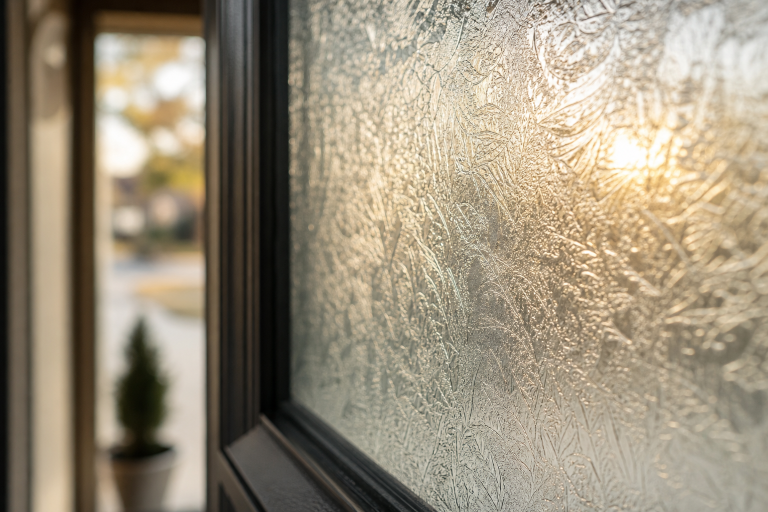
- Frosted glass: Diffuses light and obscures views, making it useful near busy streets or close neighbors.
- Textured glass: Uses patterns and surface distortion to create privacy while retaining visual character.
- Tinted glass: Can reduce glare and soften intense sunlight, though it may also reduce visible light.
- Laminated glass: Includes a bonded inner layer that can improve safety and may help reduce outside noise.
- Decorative glass: Adds personality through leaded patterns, caming, or custom details, but should suit the home's architecture.
Explain Low-E Glass in Plain Language
Low-emissivity, or low-E, glass has a thin coating that helps manage heat moving through insulated glazing. The coating is nearly invisible, but it can help reduce unwanted heat transfer while preserving daylight. The Department of Energy explains that low-emissivity coatings on glass control heat transfer, which makes them especially worth considering for doors with large glass areas.
Two Ratings to Know
U-factor describes how readily heat flows through the door-and-glass system. A lower number generally indicates less heat transfer. Solar Heat Gain Coefficient, or SHGC, measures how much solar heat enters through the glazing. A lower SHGC can help limit unwanted sun-driven heat, but it is not automatically best for every climate or orientation.
Match Glass Performance to the Local Climate
Warm regions often benefit from attention to low SHGC values, shading, and glare control. Cold regions may prioritize a low U-factor to improve comfort near the door during winter. Mixed climates require a more balanced approach, while humid and coastal areas also make weather sealing, corrosion-resistant hardware, and condensation management important. When comparing certified products, ENERGY STAR climate-zone guidance can help homeowners understand why U-factor and SHGC requirements vary by location and glazing amount.
Balance Daylight and Privacy
More glass can brighten an entry, but privacy should be evaluated in both daylight and darkness. A textured or frosted panel may obscure daytime views, yet nighttime interior lighting can still reveal movement and silhouettes. Check sightlines before ordering.
- Stand outside at the curb, walkway, and driveway during the day.
- Consider what passersby can see through the proposed glass area.
- Repeat the check after dark with interior lights on.
- Select clear, textured, frosted, or tinted glass based on the results.
Consider Safety, Sound, and Daily Wear
Style decisions should include practical questions about tempered or laminated glass, door hardware, and cleaning needs. Homes with children, pets, frequent deliveries, or heavy traffic may benefit from glass positioned higher on the door or protected by a more durable layout. Ask whether the glass is designed for the door application, how it performs near edges, and whether the system offers the desired level of sound control.
Use Glass Placement to Shape the Entry
- Narrow vertical lites: Bring in light while drawing the eye upward and preserving more privacy.
- Wide central panels: Create an open, bright look, but make privacy planning more important.
- Sidelights: Adding daylight beside a mostly solid door can make a narrow entry feel wider.
- Transoms: Bring light into tall foyers without adding glass at eye level.
Ask the Right Questions Before Ordering
- What are the door's U-factor and SHGC?
- Is the glass clear, textured, tinted, tempered, laminated, or a combination?
- How much privacy will it provide during the day and at night?
- Does the layout suit the door's sun exposure and the home's scale?
- How does the frame and glass system resist air and water entry?
- What cleaning and maintenance will the design require?
Measure, Install, and Maintain for Long-Term Results
Measure the rough opening, jamb depth, threshold height, swing direction, trim clearance, and available room for sidelights or a transom before committing to a style. Installation should include proper flashing, shimming, weather sealing, threshold alignment, and hardware adjustment. After installation, clean the glass with appropriate products, inspect weather seals periodically, keep drainage paths clear, and address loose hinges or latch alignment before they become larger problems.
Final Decision Checklist
- Review the entry's sunlight, shade, and street exposure.
- Set a realistic privacy goal for daytime and nighttime.
- Compare glass types and performance ratings.
- Choose a layout that fits the home's proportions and daily use.
- Confirm measurements, installation details, and maintenance expectations.
Conclusion
The right front door glass should work as well on an ordinary day as it does in a product photo. By considering daylight, privacy, climate, safety, placement, and installation together, homeowners can create an entrance that feels brighter, more comfortable, and better suited to their way of life.


