
Brain Puzzles and Games for Adults: Fun Ways to Boost Memory, Focus, and Mental Agility
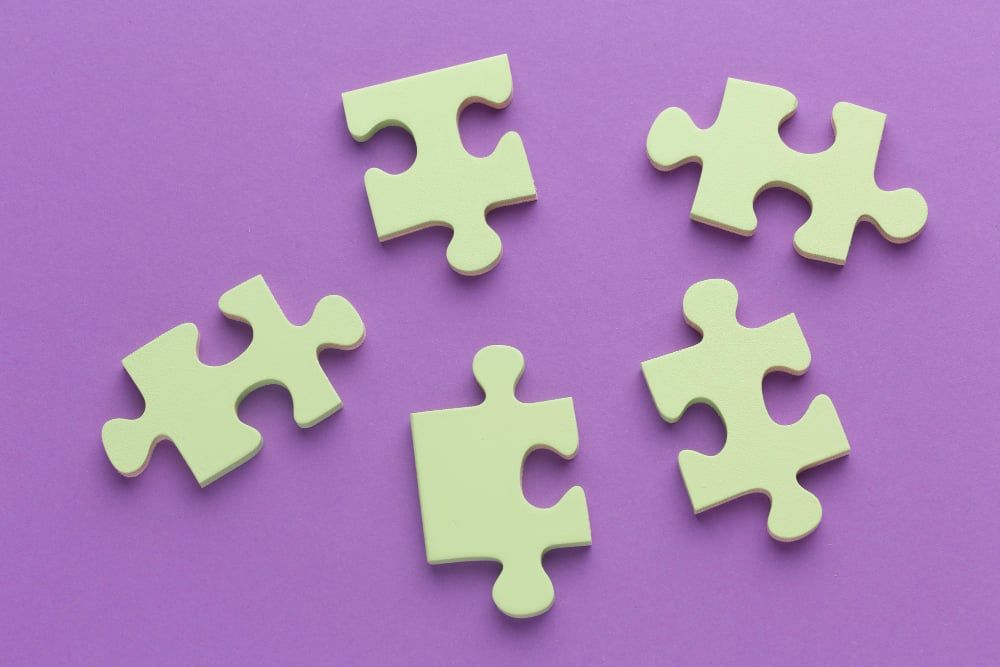
People have been fascinated by jigsaw puzzles since ancient times because they combine recreational activities with mental stimulation. Jigsaw puzzles offer more than casual entertainment because they present complex challenges that make them popular brain games for adult players.
Key Takeaways - brain games for adults
- Jigsaw puzzles serve as effective brain games for adults, enhancing memory, concentration, and problem-solving skills.
- They provide stress relief and promote emotional wellness by inducing a calming state of flow.
- Puzzles are universally appealing, benefiting children, adults, and seniors alike by improving cognitive skills and offering relaxation.
- Choosing the right puzzle involves considering difficulty level, theme, piece size, and format to maximize benefits of jigsaw puzzles.
- With digital puzzles, users enjoy convenience and customization while still reaping the mental advantages of traditional puzzles.
Table of contents - Brain Puzzle
- Why brain games for adults have benefits
- The Science Behind Jigsaw Puzzles
- How Puzzles Sharpen Brain Power
- Puzzles as Stress Relievers
- Why Puzzles Work for All Ages
- Social Benefits of Jigsaw Puzzles
- Choosing the Right Puzzle for Brain and Stress Relief
- The Future of Digital Puzzles
- Getting the Most benefits of jigsaw puzzles
- FAQ - benefits of jigsaw puzzles
- Final Thoughts - brain games for adults
Why brain games for adults have benefits
The activities enhance mental abilities while reducing stress levels and producing contentment that surpasses what other hobbies can achieve. The satisfaction from completing a 200-piece puzzle remains greater than the finished product even though the process of solving a 2,000-piece puzzle brings more substantial rewards.
The Science Behind Jigsaw Puzzles
The fundamental design of brain games exists for adult players. The activities need players to use their attention and memory and logical thinking abilities which activate different brain regions. Your brain uses both the left analytical side and the right intuitive side when you search for the correct puzzle piece. The perfect equilibrium between left and right brain functions makes puzzles an excellent tool for mental improvement.
How Puzzles Sharpen Brain Power
1. Building Memory
The process of jigsaw puzzle completion demands players to remember both the appearance and design elements and color schemes and their expected locations. The activity strengthens both short-term memory and fact retention abilities.
2. Enhanced Concentration
A puzzle requires players to maintain their focus throughout the solution process. The practice of solving puzzles trains your mind to stay focused for extended periods which leads to better concentration abilities in academic and professional settings.
3. Enhanced Problem-Solving Skills
The entire set of puzzle pieces forms a complete examination system. The process of solving the puzzle requires you to evaluate answers and develop new strategies which translate to solving complex problems in everyday life.
4. Developing Spatial Thinking
What are the benefits of Jigsaw puzzles? The game requires players to understand spatial relationships between pieces which leads to improved spatial thinking abilities according to research findings. The activity helps people develop their spatial thinking abilities which benefits their driving skills and navigation and creative design work.
Puzzles as Stress Relievers
In addition to intelligence, puzzles also serve as an important stress-reduction and emotional-wellness tool.
Entering the State of Flow
By being completely absorbed in a puzzle, you achieve a "state of flow"—a state of mind where time disappears and your mind is completely focused. This intense focus calms the nervous system and reduces anxiety levels.
Soothing Anxiety
The mechanical rhythm of sorting and fitting together puzzle pieces is soothing. It is employed to soothe frazzled brains, so puzzles are a good way of relieving anxiety.
Improving Mood
The satisfaction of being capable of completing a small portion of a puzzle provides a sense of accomplishment. This releases dopamine, a mood-enhancing neurotransmitter that maximizes motivation and focus.
Why Puzzles Work for All Ages
The beauty of jigsaw puzzles is that everyone loves them. They are skill- and age-universal, and thus a pursuit for the masses.
- Children: Build problem-solving, hand-eye coordination, and patience.
- Adults: Receive mental stimulation, stress relief, and relaxation after long working hours.
- Senior citizens: Engage minds, enhance memory, and have a soothing activity that enhances emotional well-being.
Social Benefits of Jigsaw Puzzles
Puzzles exist as activities which bring people together instead of functioning as individual pursuits.
- The family can work together on a shared family puzzle project.
- People can substitute their screen time with puzzle nights which create opportunities to bond with others face-to-face.
- The assisted living facilities provide puzzle activities which help residents build teamwork and stimulate social interaction.
The social events unite players through conversations while requiring patience and teamwork which leads to deep friendships between participants.
Choosing the Right Puzzle for Brain and Stress Relief
The selection of puzzles matters because the one you pick will determine your experience.
- Difficulty Level: The 300–500 piece puzzle range suits beginner puzzlers yet advanced puzzlers should attempt 1,000–2,000 piece puzzles.
- Theme: Select a puzzle that matches your interests because it will provide both challenge and engagement. City Puzzles provide an exciting way to discover urban areas through their colorful designs while helping you develop your mental abilities.
- Piece Size: Children and senior citizens benefit from large pieces while adults who seek challenges should use small detail pieces.
- Format: The traditional cardboard puzzle format works well with puzzle apps which provide both mental benefits and stress relief.
The Future of Digital Puzzles
Digital technology has expanded the pleasure of puzzling beyond traditional tabletop activities. The digital format of electronic puzzles delivers mental benefits through a user-friendly interface.
- Accessibility: Playability anywhere on tablets or smartphones.
- Customization: Difficulty and theme levels can be easily adjusted.
- Social Features: Excessive use of friend puzzle solving online is permitted for some programs.
For active living, electronic puzzles offer a way to enjoy the stress-reduction and sharpening of the mind that comes with puzzles anywhere, anytime.
Getting the Most benefits of jigsaw puzzles
Get the most benefit from your puzzle experience by keeping these suggestions in mind:
- Make puzzles a part of your daily relaxation and recreation time.
- Work in a quiet environment to provide the highest concentration and minimize distraction.
- Choose issues that challenge imagination and discovery.
- Solve puzzles as a group or family project so as to achieve the maximum intellectual and social benefits.
FAQ - benefits of jigsaw puzzles
Are jigsaw puzzles considered brain games for adults?
Yes, jigsaw puzzles are a proven brain game for adults that strengthen memory, concentration, and problem-solving skills. Do brain games for adults really improve memory?
Research shows that activities like puzzles and brain teasers can improve short-term memory and enhance cognitive performance over time. Can puzzles and brain games help reduce stress?
Absolutely. Puzzles encourage relaxation, mindfulness, and a “flow state” that reduces anxiety and promotes emotional well-being. What are the best brain games for adults besides puzzles?
Sudoku, crosswords, memory apps, chess, and digital puzzle games are excellent brain games that challenge the mind and build mental agility. Are brain games for adults good for seniors?
Yes, seniors benefit greatly from puzzles and brain games since they help maintain cognitive function, improve recall, and provide stress relief. How often should adults play brain games for results?
Just 15–30 minutes a day of puzzles or mental games can lead to noticeable improvements in focus, memory, and stress reduction.
Final Thoughts - brain games for adults
Jigsaw puzzles are a solitary recreation—puzzles are a mind-squeezer, stress-reliever, people-binder. Placing memory, concentration, and problem-solving skills in head-to-head competition, puzzles improve mental quickness. Meanwhile, their calming, soothing quality offers a break from life's tension.
Whether your hunger is for landscape, imagination, or City Puzzles, the payoff is the same: quicker mental quickness, less stress, and a sense of accomplishment.
And the next time you relax and puzzle, remember this—you're not just doing a puzzle. You're building a healthier brain and a calmer mind.