
Advancements in Modern Urology Care

For many men and couples, family planning is a significant life decision. In this journey, vasectomy has emerged as a highly effective and safe option for permanent contraception. With over 500,000 vasectomies performed annually in the United States, and a notable surge in interest following recent changes in reproductive health discussions since 2022, understanding this procedure is more important than ever.
Minimally Invasive Vas Isolation and Occlusion Techniques
This extensive guide will walk you through everything you need to know about vasectomy. We will cover how it works, what to expect during preparation and the procedure, and how to manage the recovery process. We will also delve into important topics like confirming sterility, understanding potential risks, and exploring modern techniques. Our aim is to provide clear, authoritative insights, reflecting the best practices found in a modern, patient-centered urology practice.


The evolution of vasectomy techniques has significantly enhanced patient comfort, safety, and success rates. Modern urology prioritizes minimally invasive approaches for isolating and occluding the vas deferens, which is the tube that carries sperm from the epididymis to the ejaculatory ducts. These advancements contribute to vasectomy's reputation as a highly effective and safe outpatient procedure.

The primary goal of any vasectomy technique is to interrupt the continuity of the vas deferens, preventing sperm from mixing with seminal fluid. While various methods exist, the current gold standard emphasizes techniques that minimize tissue disruption and maximize the likelihood of permanent occlusion.
Specialized Urology Services for No-Scalpel Vasectomy
The no-scalpel vasectomy (NSV) technique, and other minimally invasive vasectomy (MIV) approaches, represent a significant leap forward in male contraception. Unlike conventional methods that involve larger incisions, NSV utilizes a specialized puncture technique. Instead of a scalpel, a small, pointed instrument creates a tiny opening, typically less than 10mm, in the scrotal skin. This minimal access point reduces trauma to surrounding tissues.
Once the skin is opened, a ring clamp is often used to gently isolate and hold the vas deferens. This precise isolation allows the urologist to access the vas with minimal dissection, further reducing the potential for complications. The benefits of this approach are substantial:
- Hematoma reduction: The smaller opening and less tissue disruption significantly lower the risk of post-operative bleeding and hematoma formation, a common concern with older techniques. Studies show NSV is associated with lower rates of scrotal hematoma (1.8%) compared to incisional techniques (12.2%).
- Minimal dissection: Less manipulation of surrounding tissues means less swelling and pain during recovery.
- Faster skin healing: The puncture site often heals quickly without the need for sutures, leading to a more comfortable and rapid recovery.
- Non-incisional access: This method avoids a traditional incision, which many patients find less intimidating and contributes to faster recovery.
These specialized techniques are a cornerstone of effective vasectomy care, allowing for a quicker return to normal activities and a more positive patient experience.
Advanced Occlusion: Mucosal Cautery and Fascial Interposition
Once the vas deferens is isolated, the next critical step is to occlude it effectively. The choice of occlusion technique is paramount in minimizing the risk of failure, which can lead to unintended pregnancy. Current guidelines strongly recommend specific methods that have demonstrated superior long-term success.
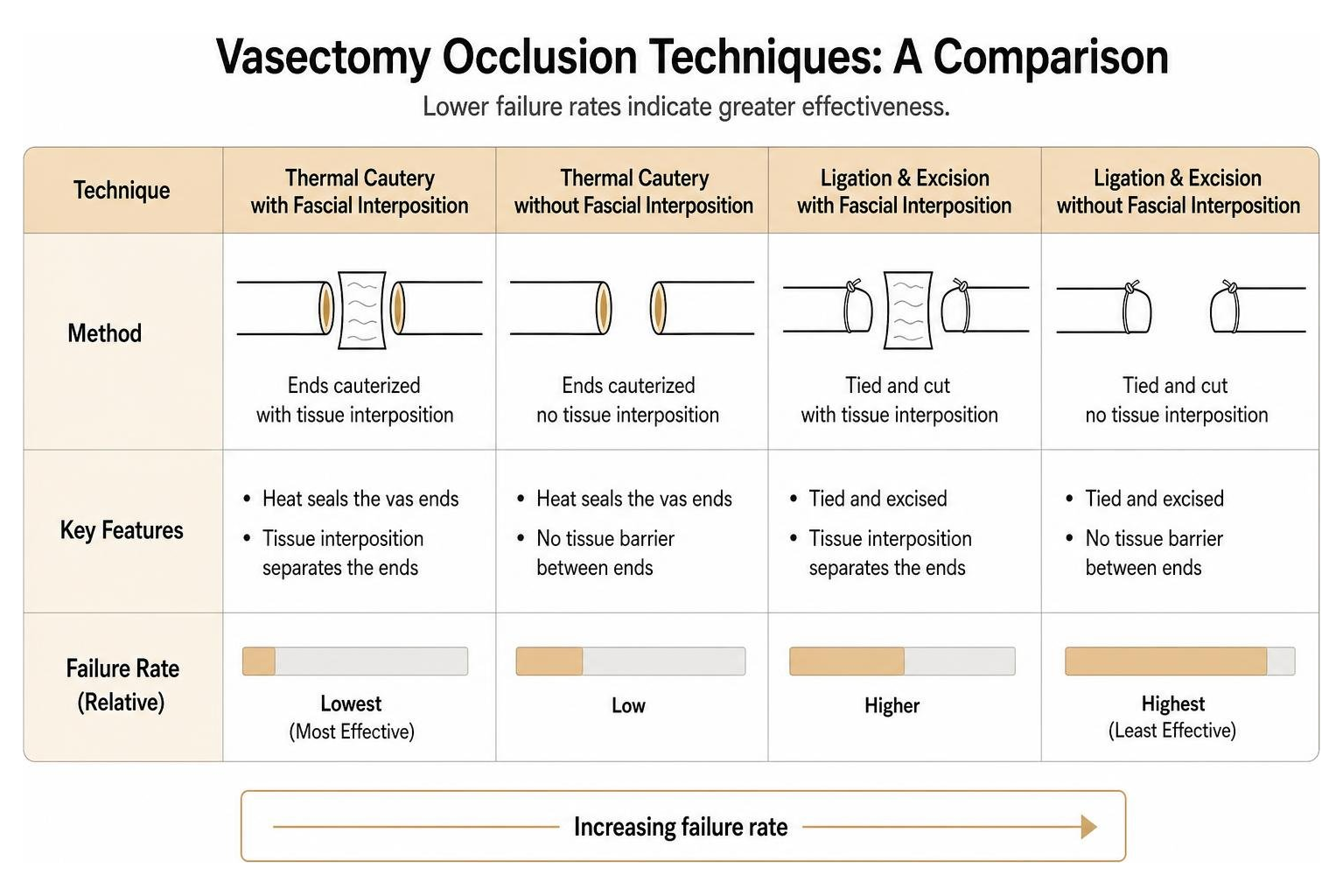
The most effective and widely recommended technique involves a combination of mucosal cautery (MC) and fascial interposition (FI).
- Mucosal cautery: This involves using a low-voltage electrical current to burn and seal the inner lining (mucosa) of the vas deferens. This process creates lumen destruction, effectively closing off the tube and preventing sperm passage.
- Fascial interposition: After cauterizing the ends of the severed vas, a layer of fascia (the connective tissue surrounding the vas) is carefully placed between the two cut ends. This physical barrier acts as a natural separator, preventing the ends from spontaneously reconnecting, a phenomenon known as recanalization.
Combining MC with FI has shown to be highly effective, yielding occlusive failure rates as low as 0.0% to 0.55% in large series. This dual approach significantly reduces the risk of recanalization, which is the primary cause of vasectomy failure.
While other methods like simple clip ligation or ligation and excision have been used, they carry higher failure rates. For instance, ligation and excision of a short vas segment without additional occlusion methods has been associated with a higher risk of failure (4.9%) compared to mucosal cautery alone (1%). Similarly, open-ended vasectomy, where the testicular end of the vas is left unoccluded, is sometimes performed, but when combined with mucosal cautery on the abdominal end and fascial interposition, it also demonstrates very low failure rates (≤0.5%).
The emphasis on these advanced occlusion techniques, particularly mucosal cautery with fascial interposition, highlights the commitment of modern urology to providing the most reliable and effective permanent contraception options available.
Comprehensive Clinical Counseling and Peri-Procedural Care
A successful vasectomy journey extends far beyond the surgical technique itself. It encompasses thorough patient education, meticulous pre-operative assessment, and supportive post-operative care. In contemporary urology, we prioritize a holistic approach, ensuring patients are well-informed, comfortable, and confident throughout the entire process.
Effective counseling is crucial, as it addresses patient concerns, clarifies expectations, and debunks common myths. This comprehensive approach contributes significantly to patient satisfaction and reduces anxiety associated with the procedure.
Pre-Operative Assessment in Contemporary Urology Services
Before any procedure, a comprehensive pre-operative assessment is essential. This typically begins with a detailed consultation, which can often be conducted as a virtual consultation, offering convenience for many patients. During this session, clinicians discuss the permanence of vasectomy, its efficacy, and the need for continued contraception until sterility is confirmed.
Key aspects of the pre-operative assessment include:
- Informed consent: Patients receive detailed information about the procedure, potential risks, benefits, and alternatives, ensuring they make an informed decision.
- Scrotal examination: A physical examination of the scrotum is performed to identify any anatomical or pathological issues that might affect the procedure.
- Coagulopathy screening: Patients are screened for any bleeding disorders or medications (like blood thinners) that could increase the risk of bleeding. It's often recommended to stop blood thinners 7 days prior to the procedure.
- Myth debunking: Clinicians address common misconceptions, such as the unfounded links between vasectomy and prostate cancer, cardiovascular disease, or nephrolithiasis. Extensive research, including the 2026 AUA Vasectomy Guideline, confirms no causal link between vasectomy and these conditions.
- Alternative contraception: The discussion includes the temporary need for alternative contraception post-procedure until sterility is confirmed.
This meticulous pre-operative process ensures patient safety and prepares them for a smooth experience.
Post-Procedure Recovery and Complication Management
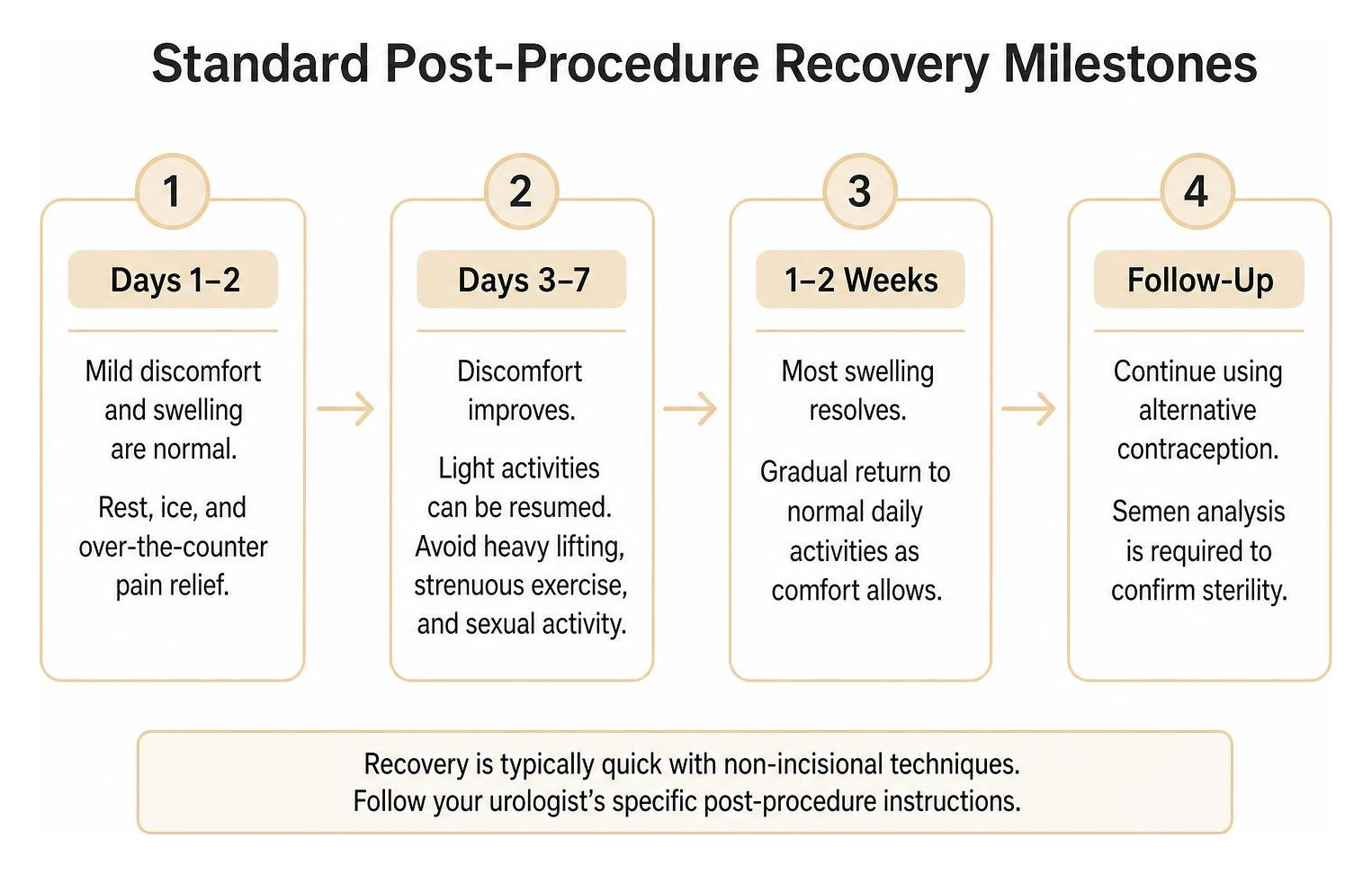
The recovery period following a vasectomy is generally straightforward, with most men resuming normal activities within a few days. However, adhering to post-operative care instructions is crucial for optimal healing and to minimize the risk of complications.
Our recommendations for post-operative care typically include:
- Ice packs: Applying ice packs to the scrotum for the first 48 hours helps reduce swelling and discomfort.
- Supportive briefs: Wearing supportive underwear, such as spandex boxer briefs, for at least one week provides comfort and reduces scrotal movement, aiding healing.
- Non-opioid analgesics: Pain is usually managed effectively with over-the-counter non-opioid analgesics like acetaminophen or NSAIDs (e.g., ibuprofen).
- Activity restrictions: Patients are advised to limit strenuous activity and sexual activity for about one week. A common recommendation is to schedule the procedure on a Thursday or Friday to allow for a 48-hour rest period over the weekend, minimizing disruption to work.
While vasectomy is a very safe procedure, potential complications, though rare, can occur.
- Hematoma rates: The risk of symptomatic hematoma (a collection of blood) is low, typically 1-2%, especially with minimally invasive techniques.
- Surgical infection: Infection rates are also low, around 1-2%. Proper hygiene and adherence to post-operative instructions help prevent this.
- Chronic orchialgia (scrotal pain): Chronic scrotal pain that negatively impacts quality of life is reported in 1-2% of men. While most discomfort resolves quickly, persistent pain may require further evaluation and management.
- Sperm granuloma: This is a small, usually painless, lump that can form from sperm leaking from the severed vas. It occurs in less than 5% of cases and often resolves on its own.
By following these guidelines and maintaining open communication with their urology team, patients can expect a swift and comfortable recovery.
Sterility Verification and Fertility Restoration Pathways
One of the most critical aspects of vasectomy is confirming sterility, as the procedure is not immediately effective. Understanding the process of post-vasectomy semen analysis (PVSA) and the options for fertility restoration, though rare, is vital for comprehensive patient care.
Post-Vasectomy Semen Analysis Protocols
Patients are not considered sterile immediately after a vasectomy because viable sperm can remain in the reproductive tract for some time. Continued use of alternative contraception is essential until sterility is confirmed through a PVSA.
Key aspects of PVSA protocols include:
- Clearance timeline: Sperm clearance typically takes 8-16 weeks, depending on the individual and the frequency of ejaculation.
- Eight-week evaluation: The first PVSA is usually scheduled 8-16 weeks post-procedure. This timing balances sufficient time for sperm clearance with minimizing the prolonged use of alternative contraception.
- Mail-in testing: For patient convenience, many practices, including those serving rural areas, offer mail-in semen analysis kits, allowing patients to collect samples at home and send them to a lab for analysis.
- Rare non-motile sperm (RNMS): Sterility is generally confirmed when a semen sample shows azoospermia (no sperm present) or a very low count of rare non-motile sperm (≤100,000 per mL). It's crucial that uncentrifuged semen specimens are used for PVSA to prevent false-positive sperm detection.
- Failure criteria: If motile sperm are present at six months post-procedure, or if >100,000 non-motile sperm/mL persist beyond six months, it may indicate a vasectomy failure, potentially requiring a repeat vasectomy. The risk of pregnancy after confirmed azoospermia or RNMS is approximately 1 in 2,000.
This rigorous follow-up ensures the vasectomy has achieved its intended purpose, providing peace of mind for patients.
Vasectomy Reversal and Assisted Reproductive Techniques
While vasectomy is intended to be a permanent form of contraception, life circumstances can change, and some men may later desire to restore their fertility. Fortunately, options exist for fertility restoration, primarily through vasectomy reversal or assisted reproductive techniques (ART).
- Microsurgical reversal: The most common method for fertility restoration is a microsurgical vasectomy reversal, which involves reconnecting the severed ends of the vas deferens. This delicate procedure, known as a vasovasostomy or, less commonly, a vasoepididymostomy (if there's an obstruction closer to the epididymis), requires specialized surgical skills.
- Success factors: The success of a vasectomy reversal depends on several factors, including the skill of the surgeon, the patient's age, and critically, the obstructive interval (the time elapsed since the vasectomy). Generally, the sooner the reversal is performed, the higher the chances of success. Overall patency rates (sperm returning to the ejaculate) can be high, and overall pregnancy rates after vasectomy reversal are about 60%.
- Reproductive autonomy: Discussing these options during pre-operative counseling is important, emphasizing that while reversal is possible, it is not a guaranteed backup option.
- Sperm retrieval and in-vitro fertilization (IVF): For men who are not candidates for reversal or for whom reversal is unsuccessful, sperm can often be retrieved directly from the epididymis or testis. These retrieved sperm can then be used in conjunction with in-vitro fertilization (IVF) and intracytoplasmic sperm injection (ICSI) to achieve pregnancy.
- Cryopreservation: For men who are younger or have concerns about future fertility changes, sperm cryopreservation (sperm banking) prior to vasectomy is an option that can provide an additional layer of reproductive autonomy.
These advanced options underscore the comprehensive nature of modern urological care, offering pathways for fertility restoration even after permanent contraception.
Frequently Asked Questions About Office-Based Vasectomy
Patients often have specific questions about vasectomy, ranging from its immediate effects to long-term health implications and the possibility of reversal. Addressing these common inquiries helps clarify expectations and reinforces the safety and efficacy of the procedure.
How soon after a vasectomy can a patient rely on it for contraception?
A vasectomy does not provide immediate sterility. While the vas deferens is interrupted during the procedure, there will still be residual sperm present in the reproductive tract beyond the point of occlusion. This means that for a period after the vasectomy, a man remains fertile.
- Clearance duration: Sperm clearance typically takes 8 to 16 weeks, or approximately 15-20 ejaculations, to clear the remaining sperm.
- Secondary contraception: Patients must continue to use an alternative form of secondary contraception (like condoms) until sterility is confirmed.
- Semen confirmation: Sterility is verified through a post-vasectomy semen analysis (PVSA), usually performed 8-16 weeks after the procedure. The patient is considered sterile only when the semen sample shows azoospermia (no sperm) or a very low count of rare non-motile sperm (≤100,000 per mL).
- Failure risk: Until this confirmation, there is still a failure risk and a chance of pregnancy. After confirmed azoospermia or RNMS, the risk of pregnancy is extremely low, approximately 1 in 2,000.
Does vasectomy increase the risk of prostate cancer or cardiovascular disease?
No. This is a common concern among men considering vasectomy, but extensive epidemiological evidence and numerous studies have consistently shown no causal link between vasectomy and an increased risk of prostate cancer, high-grade prostate cancer, or cardiovascular disease.
- Cancer risk: The American Urological Association (AUA) 2026 Guideline explicitly states that current evidence demonstrates no causal link between vasectomy and the development of prostate cancer or increased mortality from it. Early, unverified studies that suggested a possible link have since been debunked by more robust research.
- Vascular health: Similarly, there is no proven association between vasectomy and adverse vascular health outcomes.
- Systemic safety: Vasectomy is a localized procedure that does not affect hormone production (like testosterone) or other systemic body functions. Therefore, it does not impact sexual drive or overall systemic safety in these areas.
Clinicians are encouraged to actively myth debunk these concerns during pre-operative counseling, providing patients with accurate, evidence-based information.
Can a vasectomy be successfully reversed if circumstances change?
Yes, a vasectomy can be reversed, though it is intended as a permanent procedure. The process involves microsurgical reconstruction to reconnect the severed vas deferens.
- Success factors: The success of a reversal depends on several success factors, including the surgeon's expertise, the patient's age, and most importantly, the obstructive interval (how long it has been since the vasectomy). Reversals performed sooner after the original vasectomy generally have higher patency and pregnancy rates.
- Patency and pregnancy rates: Overall pregnancy rates after vasectomy reversal are about 60%. While successful patency (sperm returning to the ejaculate) can be achieved in a high percentage of cases, pregnancy rates are also influenced by the female partner's fertility and age.
- Partner age: The female partner's age is a significant factor in the overall success of achieving pregnancy post-reversal.
- Cryopreservation: For men who anticipate a potential desire for future children, or simply want to preserve their options, sperm cryopreservation (sperm banking) before the vasectomy is a highly recommended option. This provides a reliable backup for fertility without undergoing a reversal.
While reversal is an option, it is important for patients to understand that it is a more complex and expensive procedure than the initial vasectomy, and success is not guaranteed. Therefore, the decision for vasectomy should always be made with the understanding of its intended permanence.
Conclusion
Vasectomy stands as a testament to advancements in modern urology, offering a safe, highly effective, and accessible method of permanent contraception. With over half a million procedures performed annually in the U.S., its role in family planning is undeniable. The procedure's growing popularity, particularly evident in the increased volumes observed since 2022, underscores the public's confidence in its reliability.
Through a combination of minimally invasive techniques like no-scalpel vasectomy, advanced occlusion methods such as mucosal cautery with fascial interposition, and meticulous peri-procedural care, we ensure optimal outcomes and patient comfort. Adherence to rigorous guideline adherence, including detailed pre-operative counseling and precise post-vasectomy semen analysis protocols, is paramount to confirming long-term efficacy and ensuring patient satisfaction.
Vasectomy is typically an outpatient safety procedure, performed under local anesthesia, allowing for a swift recovery and minimal disruption to daily life. The debunking of myths surrounding prostate cancer and cardiovascular disease further solidifies its position as a safe and responsible choice. As urology continues to evolve, our commitment remains to uphold the highest clinical standards, providing comprehensive, evidence-based care that empowers men to make informed decisions about their reproductive health.
Important information and further reading
This article is for general education and is not a substitute for personalized guidance from a qualified health professional. A vasectomy is intended to be permanent, so discuss your medical history, recovery questions and contraceptive options with a clinician.
For a broader look at preventive care, read Common Health Symptoms Dads Should Not Ignore.
For evidence-based patient and clinician guidance, see the CDC’s permanent contraception guidance and the American Urological Association vasectomy guideline.
Post HTML