


Choosing the right wagon depends on how much gear someone needs to move, how they plan to use it, and where they plan to take it. Some people want a simple design that makes quick trips easier, while others prefer more space and organization for heavier loads.
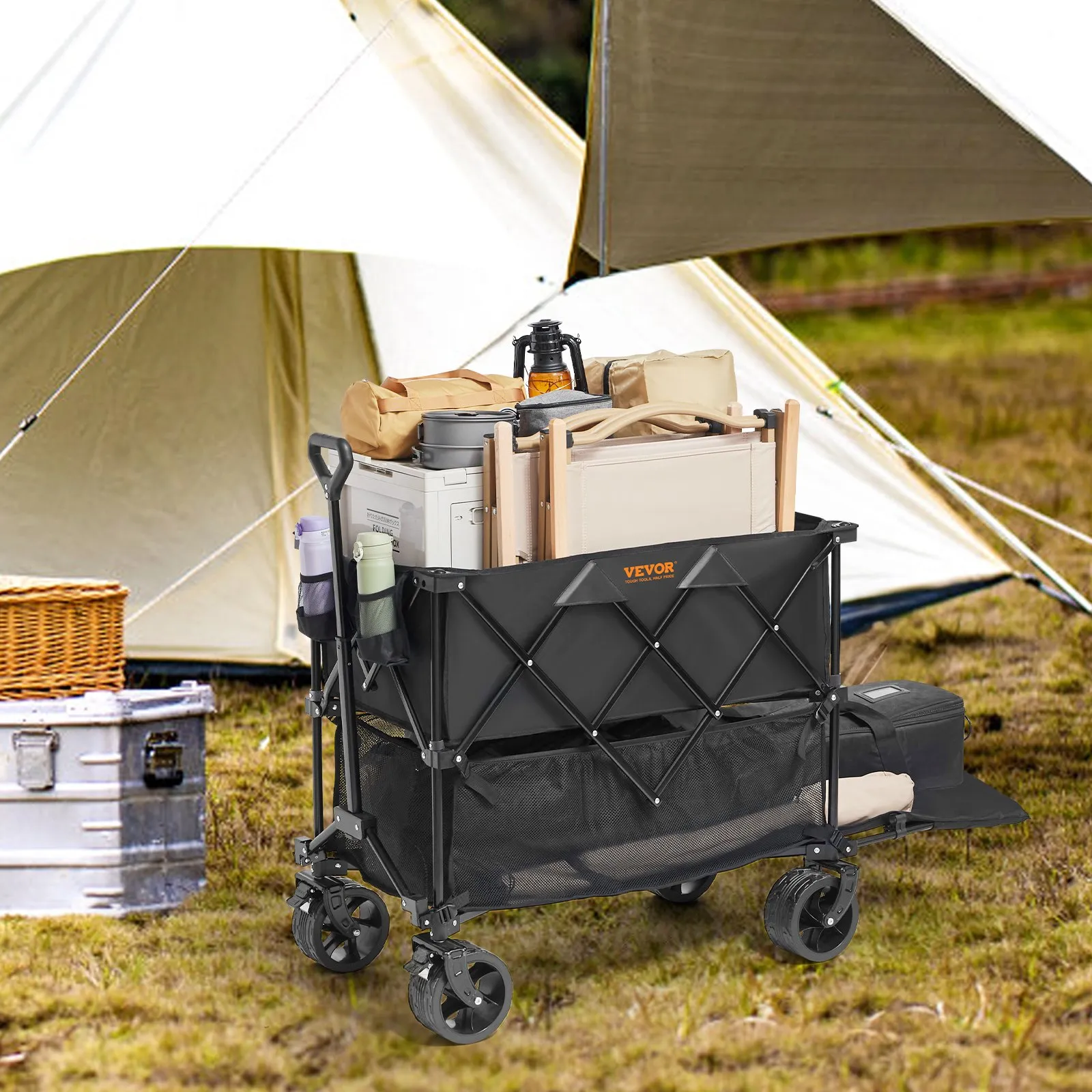
The main difference between double decker wagons and single-level wagons comes down to storage capacity, organization, and ease of use.
Both styles have clear advantages that fit different needs. A double-decker design offers more room and better separation of items, while a single-level wagon often provides lighter weight and easier handling. By looking at how each type performs in capacity, versatility, and portability, it becomes easier to see which wagon works best for different situations.
- Higher Capacity: Double-decker wagons offer significantly more storage space compared to single-level wagons
A double decker wagon provides two levels of storage, which immediately doubles the usable space compared to a single platform design. The lower shelf often supports oversized or longer items, while the upper section holds standard gear. This setup helps separate items and makes loading more organized.
Single-level wagons usually limit users to one compartment. As a result, bulky items can crowd smaller necessities, making transport less efficient. The two-tier layout avoids this problem by giving each type of gear its own space.
Some models carry heavy loads while still folding for transport. For example, a double decker wagon can handle both large and small items at once without forcing users to make multiple trips.
Therefore, families, campers, and sports teams often choose this style to move more gear in fewer hauls. The higher capacity reduces back-and-forth trips and makes outdoor activities or events easier to manage.
- Versatility: Single-level wagons like the Timber Ridge 400L provide easy access and a simpler design for quick loading
Single-level wagons stand out for their straightforward layout. They allow users to place items directly into the main compartment without dealing with multiple layers. This makes them practical for quick trips where time and convenience matter.
The Timber Ridge 400L shows how a single-level design can still handle large loads. Its open space supports bulky items without the need to balance them across separate tiers. As a result, it works well for camping gear, sports equipment, or shopping bags.
Another advantage comes from the ease of loading and unloading. Users can place items in or take them out without bending around shelves or hidden compartments. This direct access reduces effort and speeds up the process.
In addition, the simpler design often means fewer moving parts. That can make the wagon easier to fold, store, and transport. For many people, this balance of capacity and convenience makes single-level wagons an appealing choice.
- Load Capacity: UNITON Double Decker Wagon supports up to 600lbs, ideal for heavy gear transport
The UNITON Double Decker Wagon offers a total load capacity of 600lbs, with each tier supporting up to 300lbs. This makes it well-suited for activities that require moving bulky or heavy items without multiple trips.
Its design allows users to separate gear across two levels, which helps balance weight more evenly. For example, heavier items can sit on the lower deck, while lighter gear fits on the upper deck.
This capacity proves useful for outdoor activities such as camping, fishing, or sports events. It also works for household tasks like moving supplies, groceries, or garden tools.
Large wheels add stability on grass, sand, or uneven ground, so the wagon can handle different environments. The foldable frame also makes it easier to store once the work is done.
By combining high-weight support with practical storage space, the wagon provides a straightforward solution for anyone who needs to transport heavy gear efficiently.
- Multi-Level Storage: Double-decker wagons separate items by levels, reducing clutter and improving organization.
A double-decker wagon uses two tiers to hold gear instead of one. The upper space often works well for lighter or smaller items, while the lower shelf supports longer or bulkier equipment. This setup helps divide belongings in a way that feels structured and easy to manage.
By separating items on different levels, users avoid piling everything into one compartment. This reduces clutter and makes it simpler to locate what is needed without sorting through a crowded load. As a result, the wagon stays more organized during transport.
The design also prevents delicate items from being crushed under heavier gear. For example, chairs or tents can sit on the bottom level, while bags, snacks, or smaller supplies remain on top. This separation creates a clear system that saves both time and effort.
Compared to a single-level wagon, the double-decker style offers more flexibility. It allows people to pack efficiently while keeping items accessible and neatly arranged.
- Portability: Single-level wagons tend to be lighter and easier to maneuver in tight spaces
Single-level wagons usually weigh less than double-decker designs. This lighter build makes them more practical for parents who need to move the wagon in and out of a car or carry it up steps. The reduced weight also helps cut down on strain during travel.
They also take up less space, which makes a difference in crowded areas like sidewalks, stores, or parks. A smaller frame allows parents to turn corners or pass through narrow paths with less effort. This feature can be especially helpful during errands or short trips.
In addition, single-level wagons often fold more compactly. Families with limited storage space at home or in a vehicle benefit from this design. A compact fold also makes transport simpler during vacations or day trips.
Double-decker wagons may offer more seating or storage, but they usually feel heavier and bulkier. As a result, single-level wagons remain the easier choice for quick use in tight or busy spaces.
Conclusion
Double-decker wagons give users more space with two levels, which makes them useful for hauling bulky or heavy items. Single-level wagons, on the other hand, provide a simpler design that is easier to load and maneuver in tighter areas.
Each style serves different needs. Double-decker models suit outdoor trips or tasks that demand higher capacity, while single-level versions work well for lighter loads or quick transport.
The choice depends on how much weight or gear someone needs to move, how often they expect to use the wagon, and the type of terrain they face. Both designs offer practical benefits, but their value comes from matching the wagon to the situation.