
Women’s Hair Shedding: Common Causes, Practical Care Habits, And When To See A Doctor

Key Takeaways
- Some daily hair shedding is normal, but sudden, severe, or persistent changes deserve attention.
- Hair shedding and progressive hair loss are related, but not always the same concern.
- Stress, illness, restrictive diets, hormonal changes, medications, and styling practices may contribute.
- Gentle hair care can reduce breakage, but it cannot always resolve a medical cause.
- A dermatologist or other qualified clinician can help identify the reason for ongoing hair changes.
Finding more strands in the shower drain, on a pillowcase, or wrapped around a brush can be unsettling. While some shedding is a normal part of the hair growth cycle, a noticeable change in volume or density can leave many women searching for answers about hair growth for women and healthier daily habits.
The most useful first step is to separate normal shedding from signs of an underlying issue. Stress, illness, hormonal shifts, nutrition, medications, genetics, and hair-care practices can all affect the scalp and hair. Looking at the full pattern, rather than judging one wash day, makes it easier to decide what to do next.
Why Hair Shedding Can Feel So Sudden
Hair does not grow continuously at the same rate. Individual hairs move through growth, transition, rest, and shedding stages. Because each follicle follows its own schedule, it is normal to lose some strands each day. On wash days, loose hairs that might otherwise have fallen gradually can appear all at once.
Increased shedding can also be delayed. A high-fever illness, surgery, major emotional stressor, rapid weight change, or difficult postpartum period may occur weeks or months before extra shedding becomes obvious. That delay can make the cause hard to recognize without reviewing recent health and lifestyle changes.
Hair Shedding Versus Hair Loss
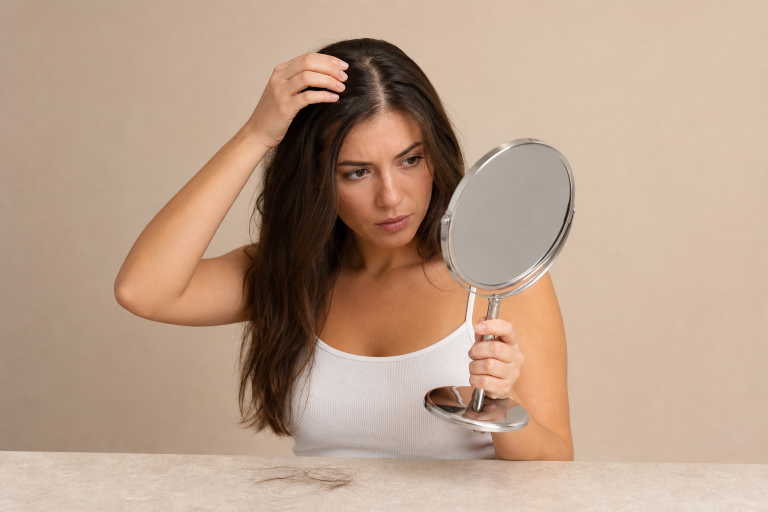
Temporary shedding often happens fairly evenly across the scalp. In many cases, the hairline and overall distribution remain similar, even if the ponytail feels less full for a while. Progressive hair loss is more likely to involve visible changes in density, a widening part, thinning around the crown or temples, or clearly defined bare spots. Cleveland Clinic offers a useful overview of hair loss warning signs that may warrant medical attention.
Signs That May Point To Temporary Shedding
- Hair seems to come out evenly rather than from one specific area.
- Shedding follows illness, stress, childbirth, weight loss, or another major event.
- Short new hairs become noticeable as shedding slows.
- The scalp shows no redness, pain, thick scaling, or inflammation.
Signs That May Point To Hair Loss
- The center part becomes wider over time.
- Thinning is concentrated at the crown, temples, or hairline.
- Round, irregular, or sharply defined bald patches develop.
- Hair changes continue for months without improvement.
Common Causes Of Increased Shedding
Stress, Illness, And Major Life Changes
Physical and emotional stress can disrupt the normal hair cycle. Common examples include recovering from an infection, poor sleep, intense training, a major life transition, rapid weight loss, or prolonged anxiety. Rather than assuming stress is the explanation, record when shedding started and consider what changed in the preceding few months.
Hormonal Changes
Pregnancy, the months after childbirth, perimenopause, menopause, and certain hormonal conditions can influence hair texture, density, and shedding. Postpartum shedding is often temporary, but a persistent or dramatic change should still be discussed with a clinician. Hair changes accompanied by irregular periods, acne, new facial hair, or unexplained weight changes deserve particular attention.
Nutrition And Restrictive Diets
Hair growth requires sufficient energy and nutrients. A diet that is too low in calories, protein, iron, or other nutrients may contribute to shedding in some people. That does not mean every person with hair changes needs supplements. High-dose vitamins can cause problems of their own, so it is usually wiser to eat balanced meals and request appropriate testing when a deficiency is suspected.
Medications And Health Conditions
Some prescription medications and medical conditions can affect the hair cycle. Thyroid disorders, anemia, scalp conditions, and autoimmune diseases are among the possibilities a clinician may consider. Do not stop or change prescribed medication because of shedding without talking to the clinician who prescribed it.
Daily Habits That May Reduce Breakage
Breakage is not the same as shedding from the root, but it can make thinning look worse. Gentle handling helps protect fragile strands. The American Academy of Dermatology shares practical hair-care tips for reducing damage and knowing when to seek professional help.
- Choose a shampoo that cleans the scalp without leaving hair excessively dry.
- Use conditioner to reduce friction, tangles, and snapping during detangling.
- Start detangling at the ends, then work upward with a wide-tooth comb or suitable brush.
- Limit frequent high-heat styling and use lower heat settings when possible.
- Avoid tight ponytails, buns, braids, extensions, or other styles that pull at the roots.
- Use chemical treatments carefully and give hair time to recover between services.
- Handle wet hair gently, since it may stretch and break more easily.
- Rinse hair after swimming and protect it from prolonged sun exposure.
How To Track Hair Changes At Home
Tracking is more useful than counting every strand. Take photos of the hairline, part, and crown once a month, using the same lighting and angle each time. Write down when shedding began, whether it is improving, and any related events such as illness, dietary changes, medication changes, childbirth, or significant stress.
Also note scalp symptoms, including itching, redness, flakes, tenderness, or pain. These details can help distinguish a simple shedding episode from a scalp issue that needs treatment. Avoid judging progress day by day, since shedding naturally varies and often looks heavier on wash days.
When To Schedule A Medical Appointment
- Hair loss is sudden, severe, patchy, or clearly concentrated in one area.
- The scalp is painful, swollen, red, itchy, scaly, or oozing.
- Eyebrows, eyelashes, or body hair are thinning, too.
- Shedding continues for several months without signs of improvement.
- Hair changes occur with fatigue, weight changes, irregular periods, or other new symptoms.
- The concern is causing distress or interfering with confidence and daily life.
What To Expect At A Dermatology Visit
A dermatologist may ask about the timing and pattern of the change, recent illnesses, family history, diet, stress, medications, menstrual or postpartum history, and hair practices. They may examine the scalp closely and, when appropriate, recommend blood tests or other evaluations. Treatment depends on the cause, which is why one-size-fits-all claims and quick fixes can be misleading.
A Simple Four-Step Plan
- Observe: Track timing, pattern, photos, and scalp symptoms.
- Reduce Damage: Use gentle cleansing, conditioning, detangling, and looser styles.
- Review Health Factors: Consider recent stress, illness, dietary changes, hormonal changes, and medication changes.
- Get Support: Seek medical guidance for sudden, patchy, painful, or persistent changes in hair.
Conclusion
Women's hair shedding can have many causes, and the right response begins with careful observation instead of quick assumptions. Support overall health, protect hair from unnecessary breakage, and monitor changes in scalp health or density. When the pattern is severe, patchy, painful, or ongoing, professional evaluation can provide clearer answers and an appropriate next step.