
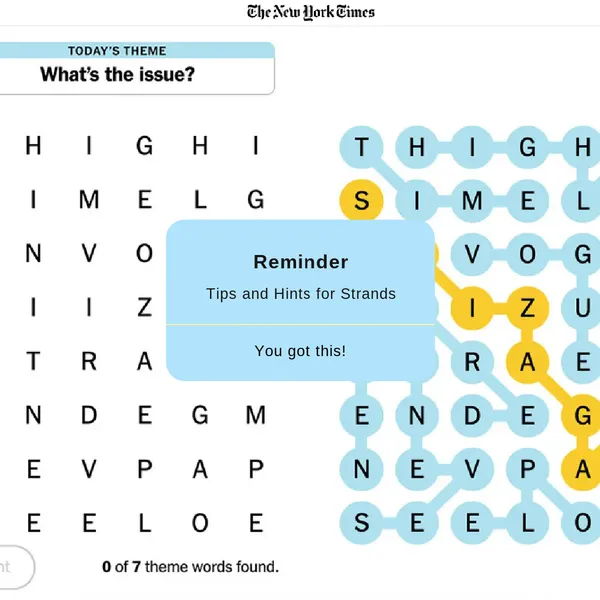
If you’re a fan of Wordle, Spelling Bee, or any of The New York Times Games, then their latest release, Strands (hints), is likely to pique your interest. This innovative word game takes the traditional word search concept and gives it a modern twist.
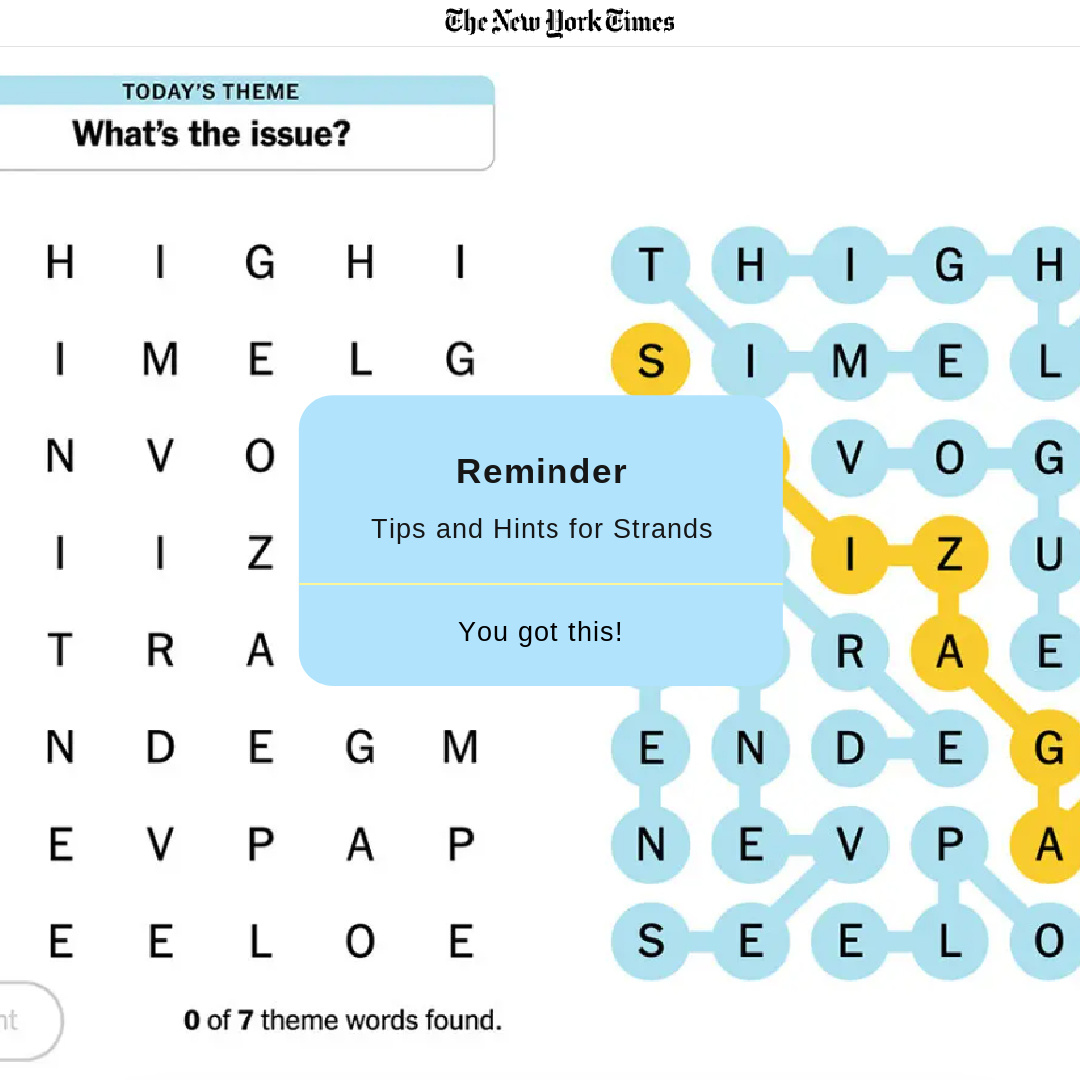
Table of contents
- What is Strands? A Game-Changer for Word Search Fans
- Today's Strands Hint: What to Look For
- Strands Clues and Strategies for Success
- Spangram Hints: Solving the Puzzle
- Why Should You Play Strands? The Benefits of Word Games
- How to Solve Strands
- Is Strands Worth the Subscription?
- FAQs - New York Times Strands Game
What is Strands? A Game-Changer for Word Search Fans
The game requires players to navigate words through a 6x8 grid structure. The words in Strands follow non-traditional paths through the grid because they can move in any direction. The game's unique grid structure makes Strands both an exciting and difficult puzzle experience.
The daily puzzles in Strands include thematic elements that provide players with hints to discover all hidden words. The game features two types of themes, which start with basic subjects like "Colors" and progress to intricate subjects like "Idioms." The "spangram" stands out as the game's distinctive feature because it connects a theme-related word or phrase across two opposite grid edges. The spangram feature in Strands provides word game players with an original puzzle-solving challenge.
Today's Strands Hint: What to Look For
The main reason you visited today is to solve the Strands hint. The puzzles contain thematic clues which guide players toward the solution. The thematic clue for today's "Fruits" puzzle includes words such as "apple" "banana" and "grape."
The solution requires you to identify both bends and connections between words. Strands words do not need to maintain a linear path because they can follow curved paths that lead back to previous letters. The word starts at the top-left corner before it moves down to the bottom-right corner. When you become stuck in the puzzle try examining the grid through sections to find groups of letters which match the theme.
Here’s an example:
Grid Letters:
E L A P P
R A N G E
B N A N A
G R A P E
S T R A W
With a theme of “Fruits,” you might spot:
- APPLE: starting in the top-left and curving downward.
- BANANA: zigzagging through the middle of the grid.
- GRAPE: stretching diagonally across the bottom half.
Today’s hint is your guide—trust it to lead you to hidden treasures.
Strands Clues and Strategies for Success
Strands isn’t just about spotting obvious words—it’s about strategy. Here are some tips to maximize your success:
- Start with the Theme Clue:
Focus on the given hint to identify possible word candidates. Think broadly about the theme and brainstorm words that fit. - Work Backwards:
Sometimes it’s easier to start with the last letter of a word and work your way back. This can help you spot words that snake around other letters. - Search for Common Patterns:
Words often share letters. Spotting these intersections can help you uncover multiple words in one go. - Don’t Overlook Short Words:
While longer words like the spangram grab attention, short words are often easier to spot and can lead to larger discoveries. - Use the Undo Feature:
Strands allows you to backtrack if you’ve made a mistake. Use this feature liberally to test out different word paths.
Spangram Hints: Solving the Puzzle
The spangram stands as the most important element of any Strands puzzle. The spangram represents the day's theme by running from one edge of the grid to the opposite edge. The spangram in a food-themed puzzle would be "delicious."
Look for extended letter sequences which appear to link the grid boundaries to find the spangram. The theme of the puzzle will help you solve the spangram by thinking about extended phrases that match the theme. The spangram for a "Weather" themed puzzle would be "thunderstorm."
Why Should You Play Strands? The Benefits of Word Games
Strands isn’t just fun—it’s good for you, too! Here are a few reasons why you should add this game to your daily routine:
- Boosts Vocabulary:
With its themed puzzles, Strands exposes you to new words and phrases. - Improves Cognitive Skills:
Solving puzzles enhances memory, focus, and problem-solving abilities. - Provides Stress Relief:
Playing games like Strands is a great way to relax and take a break from daily stresses. - Encourages Creativity:
The unique word paths in Strands challenge you to think outside the box.
How to Solve Strands
Strands may seem challenging at first glance, but with the right strategy, you’ll be spotting words and solving puzzles like a pro. Here’s a step-by-step guide to help you master the game:
Step 1: Understand the Theme
Understand The Theme
Each puzzle comes with a theme that acts as your guiding clue. For example, if the theme is “Famous Cities,” brainstorm words like “Paris,” “London,” and “Tokyo.” Having a mental list of potential words can make it easier to start.
Step 2: Look for Starting Points
Begin by scanning the grid for recognizable word fragments or clusters of letters that fit the theme. For instance, in a puzzle themed “Colors,” you might spot “R-E-D” or “B-L-U.” These can serve as your entry points into the puzzle.
Step 3: Follow the Word’s Path
Unlike traditional word searches, Strands allows words to bend and twist. Here’s how to identify a word’s path:
- Start with the first letter.
- Check adjacent tiles to see if they align with the theme.
- Remember that words can curve, so don’t limit yourself to straight lines.
Step 4: Solve Short Words First
Shorter words are often easier to spot and can clear up parts of the grid, making it easier to identify longer words. If the theme is “Fruits,” look for words like “Fig” or “Lime” before attempting longer ones like “Pineapple.”
Step 5: Unlock the Spangram
The spangram is a word or phrase that spans from one edge of the grid to another. To solve it:
- Look for long chains of letters that match the theme.
- Think of phrases rather than single words if the theme suggests it.
For example, in a puzzle with the theme “Weather,” the spangram might be “Thunderstorm” or “Rainy Day.”
Step 6: Use the Hint Feature
The game includes built-in hint functionality which helps players find correct solutions. The hint system provides excellent assistance for learning word connections and bending rules when you become stuck during gameplay.
Step 7: Practice Makes Perfect
Your ability to detect word patterns and find connections between words will improve through regular play of puzzles. Daily practice sessions of just a few minutes will help you master Strands until you solve it effortlessly.
Is Strands Worth the Subscription?
The New York Times Games subscription service includes Strands and Wordle and Spelling Bee and additional games. The subscription service costs $5 per month or $40 per year to access all available puzzles.
Pros of the Subscription:
- Unlimited access to all NYT Games.
- High-quality, expertly designed puzzles.
- Daily updates ensure fresh content.
Cons:
- Requires a paid subscription.
- It has limited appeal if you’re not a dedicated Word game fan.
Ultimately, if you enjoy word games and appreciate The New York Times’ offerings, the subscription is a great investment.
FAQs - New York Times Strands Game
Where can I find today’s Strands clue?
Each day’s Strands puzzle comes with a built-in thematic clue. Check the game’s interface for the latest hint. What is a Spangram hint in Strands?
A spangram is a long word or phrase connected to the day’s theme that spans the edges of the grid. Use the theme to guide your guesses. Are there hints for Strands every day?
Yes! The New York Times releases a new puzzle daily, complete with hints and clues to keep you engaged. How do I solve tricky grids in Strands?
Break the grid into sections and focus on small letter clusters. Think creatively about how words might bend and twist through the grid.
Have you played Strands yet or need a couple hints?
Share your favorite tips and strategies in the comments below! Don’t forget to bookmark this page and check back daily for fresh Strands hints and insights. And if you haven’t already, try The New York Times Games subscription—it’s the perfect way to challenge your brain and unwind at the same time.