

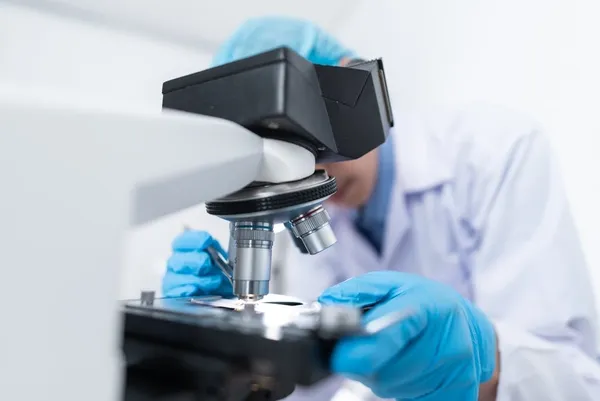
Artificial intelligence (AI) is swiftly becoming a linchpin in the healthcare industry, transforming how care is delivered and promising a world where medical interventions are more precise and outcomes more favorable.

Key Takeaways:
- AI's role in developing predictive models for patient care is to prevent diseases before they escalate.
- Improvement of diagnostic accuracy through deep learning, reducing diagnostic errors, and saving lives.
- Increase in personalized patient experiences due to AI's data processing capabilities that allow for individualized treatment plans.
- Ethical considerations and the importance of maintaining patient privacy as AI continues to integrate into healthcare.
Table of Contents:
- Introduction
- Predictive Analytics in Patient Care
- Revolutionizing Diagnostics with AI
- Personalized Treatment: Tailoring Care with AI
- Robotic Assistance and Surgery
- Enhancing Patient Engagement with AI
- Ethics and Privacy Considerations
- Looking Ahead: What's Next for AI in Healthcare?
- Conclusion
Introduction
From early disease detection and robotic surgeries to personalized treatment plans, AI's diverse applications are forming a new bedrock for patient care. This profound integration of technology is not just improving the efficacy of healthcare but also shaping patient experiences in a way that was once merely the subject of science fiction.As AI continues to evolve, its impact on healthcare expands beyond clinical settings, influencing administrative tasks, patient engagement, and medical research. The ability of AI algorithms to analyze vast amounts of healthcare data is revolutionizing diagnostics and prognostics, leading to earlier detection and better management of diseases. Furthermore, artificial intelligence in healthcare information and services empowers patients to take a more active role in their health management.Predictive Analytics in Patient Care
The role of predictive analytics in healthcare has been pivotal, leveraging AI to benefit preventative medicine. By analyzing extensive datasets, AI algorithms can identify health risks and disease patterns long before clinical symptoms manifest. This allows for proactive healthcare interventions, ultimately aiming to reduce the incidence and impact of diseases. Predictive models powered by AI have been instrumental in chronic disease management, enabling healthcare providers to design preventive strategies tailored to individual patient profiles.Moreover, predictive analytics can optimize resource allocation within healthcare systems, identifying areas of high patient demand and enabling proactive planning for staffing, equipment, and facilities. The integration of predictive analytics into electronic health records (EHRs) streamlines clinician decision-making processes, facilitating timely interventions and personalized care plans. Predictive analytics has the potential to completely transform patient care by moving the emphasis from reactive therapy to proactive management and preventative techniques.Revolutionizing Diagnostics with AI
One of AI’s most significant contributions to healthcare is in diagnostics, where it aids in the detection and interpretation of complex medical data. With deep learning techniques, which includes the utilization of Machine Vision Cameras to help with producing high performance developments, AI has improved diagnostic imaging, enabling the discovery of subtle details for the human eye that are critical for diagnosis. These advancements have elevated the diagnostic process and have been vital in diminishing errors, mitigating misdiagnosis and ensuring timely and appropriate treatment.
Furthermore, AI-powered diagnostic tools can analyze vast patient data, including medical histories, genetic information, and environmental factors, to generate more accurate and personalized diagnoses. By integrating AI into diagnostic workflows, healthcare providers can enhance efficiency, reduce waiting times for results, and improve patient outcomes. As AI continues to evolve, its potential to revolutionize diagnostics by augmenting human expertise with advanced analytical capabilities is becoming increasingly apparent.