How You Teach History Matters: How One Homeschool Mom Taught Her 5-Year-Old Historian

Homeschool mom Christy was overwhelmed by the choices when it came to teaching history to her almost six-year-old. Her daughter loved learning about history, but what was the best way to teach it? Teaching American history for kids should be more than just having them memorize a list of events and dates. It’s no wonder so many kids fail to connect with the past when rote memorization is involved!
But then Christy found the Tuttle Twins videos, which she has been using to help guide her in teaching American history for kids. The Tuttle Twins series also has some accompanying history books to go with those videos!
Problems with Rote Memorization of History
The biggest problem with how history is traditionally taught is that it only scratches the surface of the past. Kids gain only a shallow understanding of what happened and when it happened, not why it happened. They also quickly forget what they learned after taking a test on the information.
The past is a series of cause-and-effect events. To fully understand the past, kids need to know why things happened the way they did and what impact it had over the long term. Rote memorization also neglects critical thinking. Kids who have a complete understanding of history can think critically about past events and even consider other solutions that might have brought about better solutions for all.
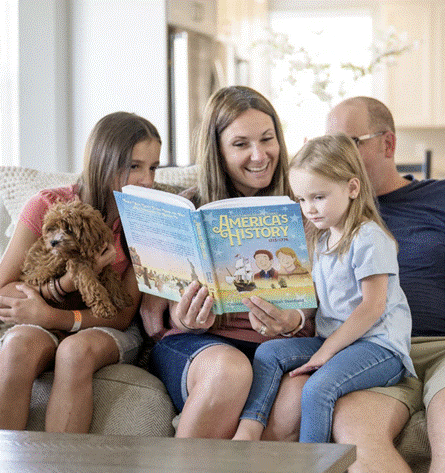
PHOTO: Tuttle Twins
A Better Way to Teach History for Homeschoolers
If you’re wondering how to teach American history for your kids, here are some tips and tricks to help avoid rote memorization.
The best way to teach history is through a story- or narrative-driven format. This approach engages kids so that they can more easily retain what they learn. The human brain is wired to remember stories, so teaching through a story format helps students connect abstract events with patterns they can remember.
It also nurtures critical thinking because stories explain why things happened the way they did. Students explore a broader range of people, conflicts, and consequences of past actions, learning to analyze cause and effect.
Kids who learn history via stories also tend to be more empathetic when it comes to challenges others are facing.
For these reasons, more and more parents are choosing the narrative approach to teaching world and American history for kids. The Tuttle Twins history books provide a great way to engage your kids with the past, helping them connect with what happened and why it happened the way it did.
The Tuttle Twins history books tap into the narrative movement among parents teaching history to their kids. Instead of traditional textbooks, parents utilize engaging, story-driven literature to immerse their kids in the past. Children also orally share the story they heard to further help them retain it, and families can explore their own history through personal timelines and family interviews.
The Tuttle Twins history books will also help you learn how to teach kids about liberty as they discover how America earned its right to freedom. There’s even a new entrant in the Tuttle Twins history series to help further kids’ education. The new Tuttle Twins history book covers the expansion westward, the War of 1812, the Underground Railroad, and other topics. Volume 1 of the Tuttle Twins history books start in 1215 and explore the settling of this great nation, the Magna Carta, and what led to the American Revolution. Volume 2 spans the Revolutionary War, the Constitution, and the Bill of Rights.
When you join the movement of parents teaching history to their kids through stories, you raise kids who can think critically, empathize with others, and remember what they learn.