How Can You Coordinate Your Outfit to Match Your Wife's Wedding Dress Perfectly?
Matching a groom’s attire to his bride’s wedding dress requires more than just picking a similar color. It involves understanding her dress style, fabric, and tone, then choosing elements that create harmony without overpowering her look.
The best way to match is to coordinate colors, textures, and subtle details so both outfits feel connected while still reflecting individual style.
A suit in the right shade can complement the dress beautifully, but smaller touches often make the biggest impact. A tie, pocket square, or cufflinks that echo the dress’s color or fabric can create a polished and intentional look. Patterns, materials, and accessories can all work together to bring a sense of unity without looking overly matched.
The setting and theme of the wedding also influence how the outfits should align. A formal ballroom event may call for rich fabrics and deeper tones, while a beach or garden wedding might suit lighter colors and softer textures. By balancing formality, personal style, and subtle coordination, a couple can create a seamless visual connection that looks timeless in every photograph.
Key Strategies to Coordinate With Your Wife's Wedding Dress
A groom’s outfit should reflect the same level of formality, style, and attention to detail as the bride’s dress. Matching does not mean identical colors or patterns, but rather a balanced and thoughtful connection between both looks. Small, deliberate choices in color, fabric, and accessories can create a polished and unified appearance.
Understanding the Formality and Dress Code
The style of the wedding sets the tone for both outfits. A black-tie event calls for a tuxedo, while a casual beach wedding allows for lighter suits or linen. The groom should match the formality of the bride’s gown to avoid looking underdressed or overdressed.
If the bride wears an elaborate gown, such as those seen in stunning wedding dresses at JJ House, the groom’s attire should carry equal sophistication. For example, a ball gown pairs well with a classic black tuxedo, while a sleek sheath dress matches a tailored slim-fit suit.
Venue and time of day also influence choices. Evening receptions often require darker colors, while daytime ceremonies work well with lighter tones. Aligning these elements creates harmony in photos and in person.
Choosing Complementary Colors and Fabrics
The groom’s colors should not clash with the bride’s dress or the wedding palette. Instead of matching the exact shade, select tones that complement. For instance, ivory pairs well with champagne or light gray, while pure white works with navy or charcoal.
Fabric choice matters as much as color. A satin-heavy gown pairs best with a suit that has a subtle sheen, while a lace dress works well with textured fabrics like tweed or wool blends. This keeps both outfits in the same visual family without appearing identical.
If the bridal party’s attire is already set, coordinate with those colors as well. Reviewing the palette used to find the best bridesmaid dresses can help guide tie, pocket square, or vest selections for a cohesive group look.
Selecting the Right Suit or Tuxedo
The cut and style of the groom’s suit should reflect the elegance of the bride’s dress. A structured three-piece suit works for formal gowns, while a lightweight blazer and trousers suit a relaxed dress style.
Tuxedos remain the best choice for highly formal weddings, especially if the bride wears a full-length gown with intricate details. In contrast, a simple sheath or tea-length dress allows for more relaxed tailoring.
Fit is non-negotiable. Even the most expensive fabric will look sloppy if the suit is too loose or too tight. Tailoring the jacket, trousers, and shirt guarantees a sharp appearance that complements the bride’s silhouette.
Coordinating Accessories for a Unified Look
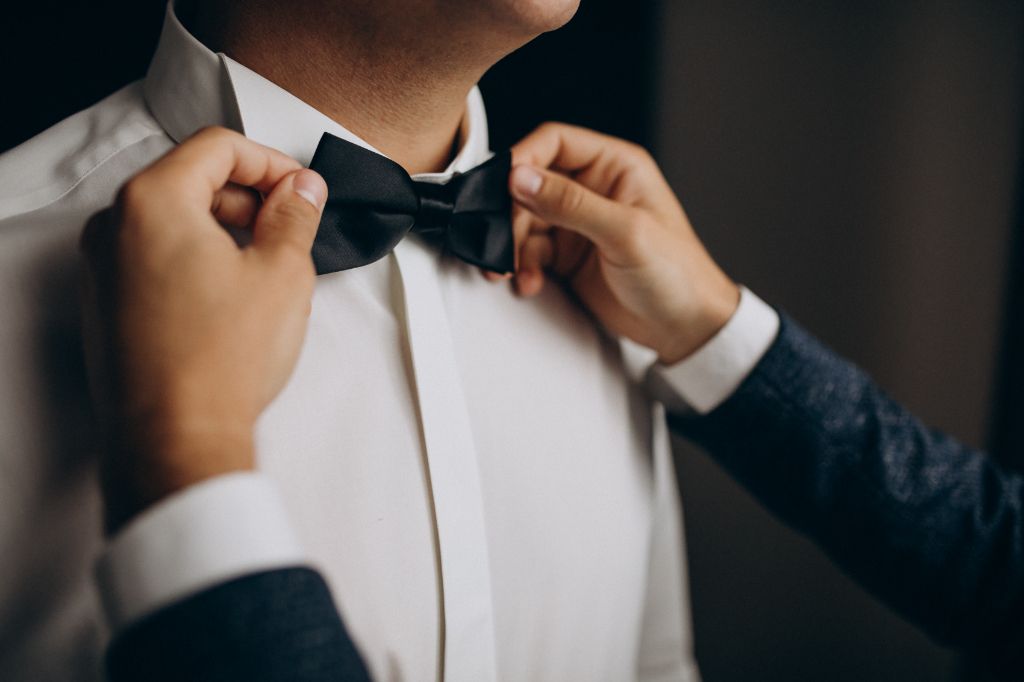
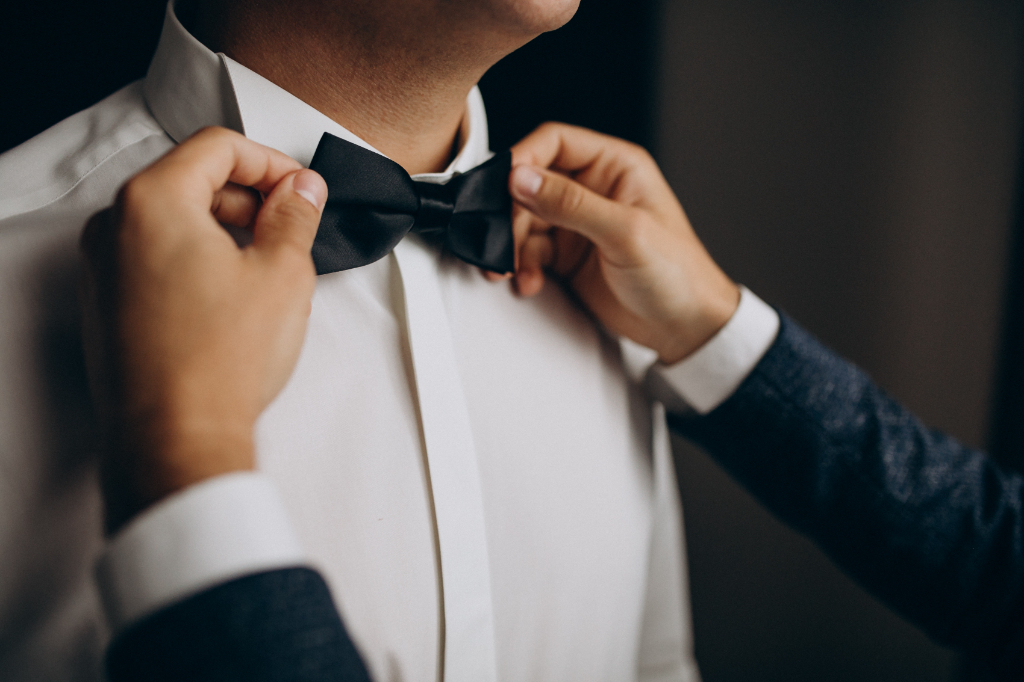
Accessories offer subtle ways to connect both outfits. A tie or bow tie in a shade from the bridal bouquet, cufflinks that echo the dress’s embellishments, or a pocket square with a hint of the gown’s color can create a visual link.
Shoes should match the formality of the suit and the wedding style. Patent leather works for tuxedos, while polished leather or suede suits a less formal look.
Boutonnieres can tie the groom’s outfit to the bridal bouquet. Matching metals in watches, cufflinks, and belt buckles with the bride’s jewelry also creates a unified aesthetic without appearing overly coordinated.
Fine-Tuning the Details for a Flawless Match
Small details can make the difference between a coordinated look and one that feels disconnected. Color accents, accessory finishes, and the balance between matching and personal style all play a role in creating a polished appearance.
Incorporating Wedding Colors Into Your Outfit
Coordinating with the wedding color palette helps the groom’s outfit blend seamlessly with the bride’s dress and the overall event theme. A tie, pocket square, or boutonniere in a shade that matches the bouquet or bridesmaids’ dresses can create a subtle but effective link.
Neutral suits pair well with most wedding colors, while darker suits work best with rich jewel tones. Soft pastels often complement lighter gowns and spring weddings.
It is also worth considering how other family members fit into the color scheme. For example, selecting complementary tones for the groom’s accessories can coordinate well with beautiful dresses for the mother of the bride, helping the entire wedding party look cohesive without appearing too uniform.
Matching Metals and Small Accessories
Metal finishes on accessories should align with the bride’s jewelry and dress accents. If her gown features silver beading, cufflinks, a tie bar, and watch details in silver will match more naturally. Gold or rose gold tones pair better with warmer dress embellishments.
Shoes and belts should share the same leather tone for a clean look. Even small details like watch straps or lapel pins can influence the overall harmony of the outfits.
Coordinating boutonniere holders or pocket watch chains with the bride’s chosen metal tone adds another layer of refinement. These subtle touches help the outfits feel connected without overwhelming the main focus—the wedding dress.
Balancing Individuality and Cohesion
Matching too closely can look forced, while dressing without any connection can feel disjointed. The goal is to reflect the same level of formality and style while allowing each person’s personality to show.
For example, the groom can wear a patterned tie or textured vest that picks up a color from the bridal bouquet, while still maintaining a distinct look.
Personal touches—such as a favorite watch, unique cufflinks, or a custom lining inside the jacket—add individuality. These details keep the outfit authentic while still aligning with the overall wedding aesthetic.
Conclusion
Coordinating a groom’s outfit with the bride’s dress works best through thoughtful color choices, fabric alignment, and balanced detailing. Matching does not always mean identical shades; complementary tones can create a more natural and polished look.
Attention to textures, patterns, and accessories adds harmony without overpowering the bride’s style. Small elements like a tie, pocket square, or boutonniere that reflect her dress can tie the looks together.
By planning early and focusing on both outfits as part of one visual story, couples can achieve a cohesive appearance that feels intentional and timeless.