Chainsaw Guide Bar Length, Pitch and Gauge Explained

Have you ever searched for a replacement chainsaw bar and found yourself looking at terms like "3/8 pitch" and ".058 gauge" with no clear idea what they mean? Most chainsaw users know their saw by how it feels and how it performs. Few have ever needed to look closely at the specifications stamped on the bar itself.
There are three numbers that determine whether a replacement bar will fit and function correctly: bar length, pitch, and gauge. Getting any one of them wrong means the part won't seat, won't run, or won't be safe to use. Selecting compatible Tsumura chainsaw bars starts with understanding what these three numbers mean. This article explains each one in plain terms.
What Does Guide Bar Length Mean?
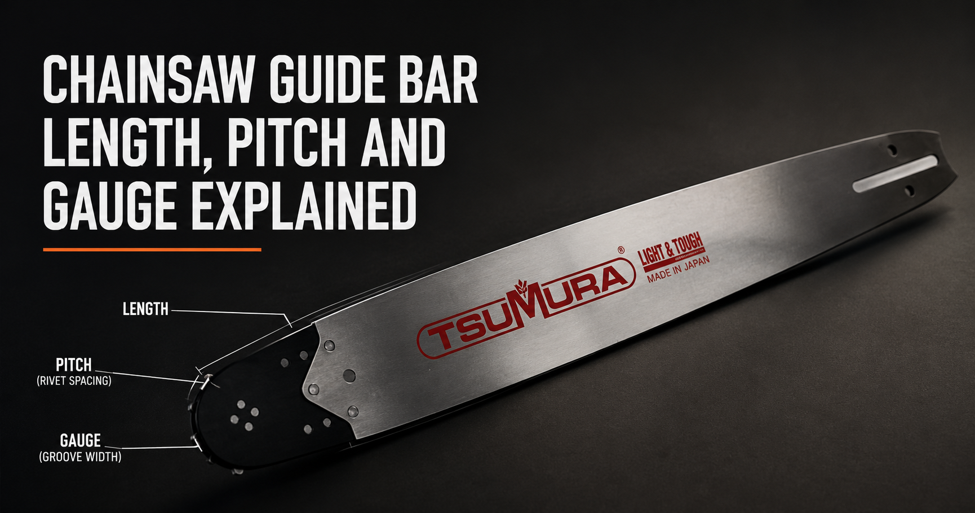
Guide bar length refers to the usable cutting length of the bar, not the total length of the bar itself. It is measured from the tip of the bar to the point where the bar enters the saw body. Most mid-range chainsaws can accept more than one bar length, so the figure stamped on the existing bar is a reliable starting point rather than a fixed limit.
Bar length determines the maximum diameter of timber the saw can cut in a single pass. For general property maintenance and firewood cutting, bars in the 16 to 18 inch range are commonly used. Longer bars suit felling work but add weight and require more engine power to run effectively. Matching bar length to the intended task generally produces better cutting performance and reduces strain on the saw.
What Is Chain Pitch?
Chain pitch is the measurement of the spacing between chain drive links, calculated as the average distance across three consecutive rivets. The most common pitch sizes are 1/4", .325", 3/8", and 3/8" low profile. Each size refers to a different chain and bar combination, and pitch must match both the guide bar and the drive sprocket on the saw body.
When pitch is mismatched, the chain will not seat correctly on the bar rail or engage the sprocket as intended. For most mid-range homeowner and farm saws, 3/8" pitch is the most common specification. The pitch is usually stamped on the guide bar near the heel or listed in the saw's original documentation. If neither is available, a local dealer can generally identify the correct pitch from the model number alone.
What Is Bar Gauge?
Bar gauge is the measurement of the groove that runs along the guide bar, which the drive links of the chain sit inside. The most common gauge sizes are .043", .050", .058", and .063". Gauge must match the thickness of the drive links on the chain being used. If the gauge is too narrow, the chain will not fit. If it is too wide, the chain will run loose, which affects both cutting performance and safe operation.
Gauge is the specification most often overlooked when ordering replacement parts and is a common cause of incompatible chain purchases. It is generally stamped on the guide bar alongside the pitch marking. When in doubt, cross-referencing the gauge against the saw's model specifications before ordering is a straightforward way to avoid a mismatch.
How to Find Your Specs Without the Manual
Most chainsaw users no longer have the original owner's manual, but the necessary specifications are usually available without it. The guide bar itself is the first place to check, since bar length, pitch, and gauge are typically stamped near the heel of the bar where it enters the saw body. A small plate on the saw body may also carry relevant model and specification information.
If the bar markings are worn or unclear, the manufacturer's website can often return the correct specifications by model number. Local dealers familiar with common saw brands can also look up compatible bar and chain specs quickly.Before ordering any replacement bar or chain, confirming all three figures: length, pitch, and gauge reduces the risk of receiving a part that does not fit.. Specialist suppliers with clear specification listings make this cross-referencing straightforward.
Why These Three Specs Matter Before You Buy
Bar length, pitch, and gauge must all align with the saw and the intended use before a replacement bar is ordered. A bar that matches on length but differs on pitch or gauge will not run correctly and may create a safety issue. Treating these three figures as a pre-purchase checklist is a practical habit that avoids the cost and delay of returning incompatible parts.
Buying from a supplier with clearly listed specifications reduces the margin for error. RG Enterprises stocks Tsumura chainsaw bars across a range of bar lengths, pitches, and gauges suited to both domestic property use and working farm conditions. Tsumura bars are designed to cross-reference with major chainsaw brands, making it easier to confirm compatibility before purchase.
Knowing Your Numbers Before You Buy
Bar length determines usable cutting capacity, pitch governs chain and sprocket compatibility, and gauge controls how the chain sits in the bar rail. Confirming all three before ordering is the most reliable way to avoid purchasing a part that does not fit.
Most of this information is stamped on the existing bar. Once those three figures are known, selecting a compatible replacement becomes a straightforward process rather than a guessing exercise.