

Japan is a country of quiet opposites — a place where ancient temples stand beside neon towers, and moments of stillness coexist with the rush of innovation. Travelling across its islands feels like moving through time itself, where every stop tells a different story. From the poignant stillness of Hiroshima to the electric rhythm of Tokyo, Japan reveals not just its contrasts, but the thread of humanity that binds them together.
A Journey of Contradictions
Few places embody contrast as naturally as Japan. It’s a land where a thousand-year-old tea ceremony and a robot-run café can both feel completely at home. Where nature is revered, yet technology leads daily life. Where tradition isn’t an artefact — it’s a living part of modern identity.
Travelling through the country is a lesson in harmony, not opposition. The landscapes change — from cherry blossoms to skyscrapers, from bamboo forests to LED lights — but the spirit remains the same: calm, precise, quietly proud.
It’s in that blend of old and new that Japan’s magic truly lives.
The Route Through the Heart of Japan
The most authentic way to see Japan is not from a plane window, but from its trains. The Osaka to Tokyo train is more than a route — it’s a ribbon that connects the country’s beating hearts. In less than three hours, the Shinkansen glides from one metropolis to another, crossing mountains, rivers, and endless plains of green.
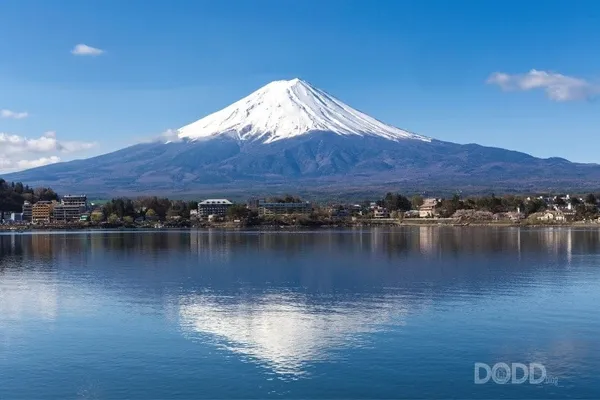
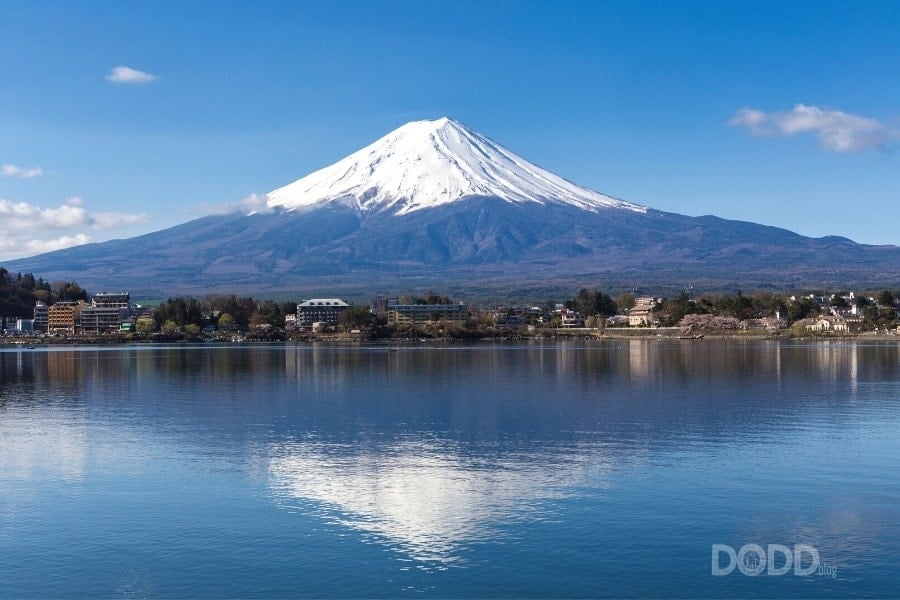
For first-time visitors, that journey is almost meditative. The carriages are spotless, the ride silent, the passengers immersed in books or sleep. Through the window, Japan reveals itself like a slow-moving film: neat houses, rice paddies, sudden glimpses of the sea. And sometimes, if the sky is clear, Mount Fuji stands like a quiet sentinel in the distance.
It’s travel at its most elegant — unhurried, efficient, and deeply human.
Hiroshima: Where Memory Speaks Softly
To understand Japan’s present, you have to stand in Hiroshima’s peace. Arriving at Hiroshima station, the first impression is not of sorrow, but of renewal. The city is alive, vibrant, full of laughter and bicycle bells — a testament to resilience rather than tragedy.
At the Peace Memorial Park, visitors move slowly among trees and sculptures, the air thick with reflection. The Atomic Bomb Dome, left in ruins, stands as a reminder of what was lost — but also of what humanity can rebuild. Schoolchildren leave paper cranes, bright and delicate, like symbols of hope fluttering in the wind.
Hiroshima isn’t defined by what happened in 1945; it’s defined by what came after. It’s a city that chose peace over bitterness — and in doing so, became a mirror for the world.
Osaka: The Soul of Modern Japan
Just a few hours east of Hiroshima lies Osaka, Japan’s second city and arguably its most spirited. If Tokyo is polished and orderly, Osaka is expressive and unfiltered — the country’s comedian, its chef, its loud heartbeat.
The streets of Dotonbori blaze with neon. Food stalls send out the smell of takoyaki and okonomiyaki. Locals laugh loudly, greet strangers, and debate over street snacks. There’s a warmth here that’s rare in big cities — a sense that life should be enjoyed, not endured.
Osaka represents Japan’s appetite for joy — a reminder that the country’s reputation for quiet restraint tells only half the story.
Kyoto: Between Earth and Spirit
Between Osaka and Tokyo lies Kyoto, the cradle of Japanese culture.
If Osaka is all noise and appetite, Kyoto is all whisper and balance. Once the imperial capital, it remains Japan’s soul — a city of temples, gardens, and wooden houses where time seems to stretch differently.
At dawn, the Kiyomizu-dera temple glows in soft light, mist rising from the surrounding hills. By midday, the bamboo groves of Arashiyama hum gently in the breeze. In Gion, women in silk kimonos cross narrow stone lanes, their steps barely audible.
Kyoto invites visitors to slow down, to breathe, to notice. Here, beauty is never loud — it hides in the details: a tea bowl’s glaze, the pattern of moss in a garden, the way sunlight passes through paper screens.
Tokyo: The Pulse of the Future
And then, Tokyo.
Arriving here after the calm of Kyoto or the intimacy of Hiroshima feels like stepping into another century. The city is immense, alive, and almost symphonic in its energy. Trains glide in perfect rhythm, lights pulse from every direction, and the sheer scale of it all can feel overwhelming at first.
But beneath the glittering skyline, Tokyo is surprisingly personal. Each neighbourhood has its own heartbeat. In Asakusa, ancient shrines stand beneath modern billboards. In Shibuya, teenagers experiment with fashion as freely as artists do with paint. And in quiet backstreets, small ramen shops buzz with soft conversation and the clink of ceramic bowls.
Tokyo is where Japan’s contradictions find perfect harmony: discipline and creativity, tradition and rebellion, speed and serenity.
A Culture of Care
One of the first things travellers notice in Japan is the precision — everything has a place, a rhythm, a purpose. Trains arrive to the second, meals are presented like art, and greetings carry real meaning. But beneath that precision lies something deeper: care.
There’s a mindfulness to Japanese life that feels almost meditative. Whether it’s a shopkeeper bowing, a craftsman wrapping a purchase, or a commuter keeping their phone on silent, these small acts reveal a collective respect for others.
It’s this culture of consideration that gives Japan its distinctive atmosphere — a society built not just on rules, but on empathy.
The Taste of the Journey
Food is another thread that weaves Japan’s regions together.
Each city has its own flavour, both literal and emotional. Hiroshima’s speciality, okonomiyaki, is layered with noodles and sauce — messy, satisfying, communal. Osaka’s street food is bold and playful, while Kyoto’s kaiseki meals are precise and poetic.
By the time you reach Tokyo, food becomes innovation itself — sushi delivered by conveyor belt, Michelin-starred ramen, desserts shaped like cherry blossoms. But even the smallest meal feels intentional. Eating in Japan isn’t just nourishment — it’s gratitude.
Nature in Motion
Even in its most urban spaces, Japan never loses sight of nature. Cherry blossoms mark the arrival of spring, and entire cities pause to admire them. In autumn, fiery maples turn temple gardens into living paintings.
The seasons are more than weather — they’re a rhythm by which life moves. From Tokyo’s manicured parks to the sacred forests near Nara, Japan’s relationship with nature feels deeply spiritual. It’s a dialogue, not a domination.
And perhaps that’s the key to understanding Japan’s contrasts: they’re not conflicts, but balances. Modernity grows beside tradition, steel beside stone, neon beside blossom.
Reflections on Resilience
Travelling through Japan also means witnessing its quiet resilience. Earthquakes, wars, and economic shifts have shaped its history, yet the nation continues to rise — not with defiance, but with dignity.
In Hiroshima’s peace monuments, Kyoto’s restored temples, or Tokyo’s ever-changing skyline, you see the same principle: renewal through respect. Japan doesn’t erase its scars — it honours them, then builds again.
That resilience isn’t just physical; it’s emotional. It’s in the calm faces on the morning train, in the care of an elderly gardener pruning bonsai, in the simple beauty of a handwritten note.
Family and the Future
For families travelling to Japan, the experience is transformative. Children are fascinated by the robots in Tokyo’s museums, the bullet trains that glide like silver arrows, the animated billboards that feel alive. Parents, meanwhile, are often moved by the sense of safety, order, and kindness that underpins daily life.
There’s something universal in how Japan welcomes visitors — with quiet efficiency, but also genuine warmth. Whether you’re exploring Hiroshima’s peace parks or watching the Shibuya crossing light up at night, the country seems to whisper the same message: progress without forgetting compassion.
The Japan That Endures
As the journey ends, it becomes clear that Japan isn’t defined by its contradictions, but by its harmony. Each city contributes a note to the country’s symphony: Hiroshima’s remembrance, Osaka’s laughter, Kyoto’s grace, and Tokyo’s rhythm.
Together, they create a nation that moves forward while bowing to its past.
And somewhere between a quiet shrine and a neon-lit crossing, you realise that Japan isn’t a destination — it’s a balance.
A balance between what changes and what never should.