
Best Practices in Pet Care and Nutrition

Our beloved pets are more than just animals; they are cherished members of our families. Just like us, their health and happiness are profoundly influenced by what they eat. Nutrition is one part of good preventive care, alongside veterinary visits, exercise, enrichment, and a safe home.
Navigating pet food can feel overwhelming. With countless brands, ingredients, and feeding philosophies, how do we make the best choices for our furry friends? This extensive guide aims to demystify pet care and nutrition, providing you with evidence-based insights to make informed decisions.
We'll explore the fundamental building blocks of a healthy diet, from essential nutrients like protein and fats to crucial vitamins and minerals. We'll delve into how to determine the right portion sizes for your pet's unique needs, understand the differences between commercial and alternative diets, and identify common nutritional myths. Furthermore, we'll cover specific feeding guidelines for every life stage, discuss how nutrition can manage common health conditions, and highlight dangerous foods to avoid.
Prepare to empower yourself with the knowledge needed to foster your pet's optimal health through smart, thoughtful nutrition.

Fundamental Principles of Pet Care and Nutrition
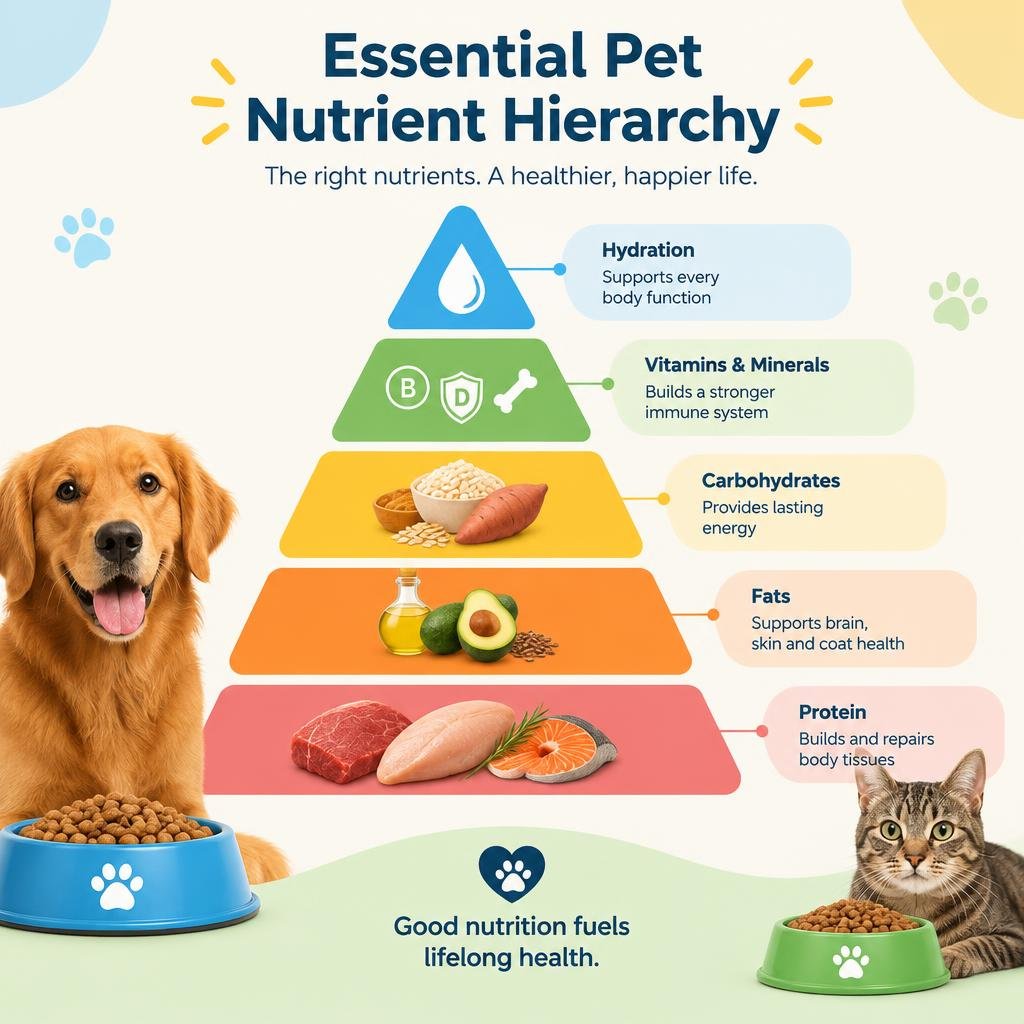
At the heart of pet longevity and dietary wellness lies a deep understanding of species biology and metabolic health. Just as with humans, pets require a balanced intake of specific nutrients to thrive. These essential components include macronutrients—crude protein, dietary fats, and carbohydrates—and micronutrients, which encompass vitamins and minerals. Hydration balance, primarily through adequate water intake, is equally critical, making up 60% to 70% of a pet’s body weight and playing a vital role in every bodily function.
While both dogs and cats need these fundamental nutrients, their precise requirements and how their bodies utilize them differ significantly. Cats, for instance, are obligate carnivores with unique metabolic pathways, whereas dogs are omnivores, capable of digesting a broader range of food sources. Understanding these distinctions is paramount to providing optimal nutrition.
Here's a general comparison of canine and feline nutritional requirements:
Dogs and Cats Have Different Nutritional Needs
- Protein: Both species need adequate protein; cats have particular requirements, including dietary taurine.
- Fats: Essential fatty acids support normal health, but the required balance differs by species and life stage.
- Vitamins and minerals: A complete and balanced diet supplies these in appropriate amounts. Extra supplements can upset that balance.
- Water: Fresh water should always be available. Moisture-rich food can contribute to daily fluid intake.
Essential Macronutrients and Micronutrients for Dogs and Cats
Protein is fundamental, providing essential amino acids vital for growth, tissue repair, enzyme production, and immune function. Cats, in particular, have a higher protein requirement than dogs due to their unique metabolism, and they cannot synthesize certain amino acids like taurine and arginine, making dietary sources critical for heart, vision, and reproductive health.
Dietary fats are concentrated energy sources, providing more than twice the energy per gram compared to protein or carbohydrates. They are crucial for absorbing fat-soluble vitamins (A, D, E, K), maintaining healthy skin and coat, and supporting cellular repair. Essential fatty acids, such as omega-3 and omega-6, play key roles in inflammation regulation and overall well-being, with specific fatty acid profiles being species-dependent. Cats also require arachidonic acid, which dogs can synthesize.
While not strictly essential for adult dogs and cats as primary energy sources, carbohydrates provide readily available glucose and dietary fiber. Fiber is vital for digestive health, promoting healthy gut bacteria (which produce short-chain fatty acids like those providing 70% of colonocyte energy in dogs), regulating bowel movements, and aiding in weight management by promoting satiety.
Micronutrients, including bioavailable minerals and vitamins, are required in smaller amounts but are indispensable for countless bodily processes. For instance, a proper calcium-phosphorus ratio is critical for skeletal development and maintenance. Vitamin A is essential for vision and immune function, but cats must obtain it in its pre-formed state from animal sources. Vitamin D is crucial for bone health, while vitamin E acts as an antioxidant, protecting cells from damage. B-complex vitamins are involved in energy metabolism and nervous system function. Excessive supplementation of some vitamins, like A and D, can lead to toxicity, emphasizing the importance of a balanced diet.
Obligate Carnivores vs. Omnivores: Key Biological Differences
The most significant distinction in pet nutrition stems from the evolutionary biology of dogs and cats. Cats are true obligate carnivores, meaning their bodies are specifically adapted to process and thrive on a diet primarily composed of animal tissue. Their digestive systems are characterized by a highly acidic stomach, a relatively short intestinal tract, and a lack of salivary amylase, an enzyme that initiates starch digestion. This feline carnivory necessitates a diet rich in animal protein and fat, with specific requirements for nutrients like taurine and pre-formed Vitamin A, which they cannot synthesize from plant precursors. Their hepatic enzymes are geared towards processing protein and fat, making them less efficient at carbohydrate metabolism.
Dogs, on the other hand, are omnivores. While they are descendants of wolves, domestic dogs have undergone genetic adaptations, including three gene mutations that enhance starch digestion and glucose absorption. This allows them to thrive on diets containing a wider range of ingredients, including carbohydrates. Their digestive systems are more flexible, possessing some salivary amylase, and their metabolism is more adaptable to varying macronutrient ratios. Canine omnivory means they can efficiently derive energy from protein, fats, and carbohydrates, making nutrient bioavailability from diverse sources generally higher.
For pet owners, this means that while dogs can often do well on a high-quality, balanced diet that includes plant-based ingredients, cats require a diet where animal-derived ingredients are prominent. When selecting food for your feline companion, it's crucial to prioritize options that reflect their carnivorous nature. For example, some brands offer carefully formulated, mercury-tested premium cat food that provides the high-quality protein and essential nutrients cats need, ensuring their diet supports their unique biology. This focus on species-appropriate nutrition is vital for preventing diet-related health issues.
Daily Energy Requirements, Portion Control, and Body Condition
Understanding your pet's energy needs is fundamental to maintaining a healthy weight and preventing common issues like obesity, which affects more than half of all dogs and cats in the U.S. in September 2026. Daily calories must be carefully managed through precise portion management, guided by factors such as age, weight, activity level, and life stage. The caloric density of their food, combined with their physical activity, dictates how much they should eat.
Monitoring your pet's body condition and muscle condition is an ongoing process that helps us adjust their diet to keep them at an ideal weight.

Calculating Resting and Maintenance Energy Requirements
To determine the right portion size, we first need to estimate a pet’s daily caloric needs. This starts with calculating their Resting Energy Requirement (RER), which is the energy needed for basic bodily functions at rest. The common RER formula is 70 × (body weight in kg)^0.75.
Once the RER is established, we apply a Maintenance Energy Requirement (MER) multiplier to account for activity level, life stage, and neuter status. For example, an adult neutered dog might need 1.6 times its RER, while an intact adult dog might need 1.8 times. A very active working dog or a growing puppy will require significantly higher multipliers to meet their energy expenditure. Conversely, an obesity-prone pet might need a lower multiplier (e.g., 1.4 times RER) to facilitate weight loss. These calculations provide a baseline for daily rationing, which should be adjusted based on regular weight tracking and body condition assessments. For example, a 10-pound cat typically needs about 200 calories a day, while a 50-pound dog might need 700 to 900 calories, and larger dogs can require 1,350 calories or more.
Assessing Body and Muscle Condition Scores
Beyond the scale, assessing your pet's Body Condition Score (BCS) and Muscle Condition Score (MCS) provides a more accurate picture of their health. BCS is a visual and palpable assessment of body fat, typically rated on a 5-point or 9-point scale. An ideal BCS means you can easily feel your pet's ribs without pressing hard, they have a visible waistline when viewed from above, and an abdominal tuck from the side. If you can't feel their ribs, or if their waistline is absent, they are likely overweight. Each point on a 9-point BCS scale can represent roughly a 5% change in body fat.
MCS evaluation focuses on lean muscle mass, which is particularly important for senior pets to detect sarcopenia (muscle wasting). This involves palpating muscles over the spine, shoulders, and hips. Regular veterinary assessment of both BCS and MCS is crucial for early detection of weight issues or muscle loss, allowing for timely dietary adjustments.
Evaluating Diet Formulations: Commercial, Homemade, and Alternative Options
The pet food market offers a vast array of options, from highly processed extruded kibble to raw feeding and home-cooked meals. Each type has its own set of benefits and considerations regarding nutritional adequacy and pathogen safety. Understanding these differences is key to making informed choices for your pet's health.
Decoding Pet Food Labels and Regulatory Statements
Choosing a high-quality commercial pet food begins with understanding its label. Pet food labels are regulated documents that provide crucial information, but they require careful interpretation. Key elements include the product name, net weight, manufacturer details, ingredient list, guaranteed analysis, feeding guidelines, caloric content, and a statement of nutritional adequacy.
The Guaranteed Analysis (GA) lists the minimum percentages of crude protein and crude fat, and maximum percentages of crude fiber and moisture. These are "as fed" values, meaning they include water content. To accurately compare the nutrient content between dry and wet foods, calculate the dry matter (DM) percentages. For instance, a wet food might appear to have less protein than a dry kibble on an "as fed" basis, but on a DM basis, it could be much higher after accounting for its higher moisture content.
The ingredient list shows ingredients in descending order by weight. Be aware of "ingredient splitting," where a single ingredient (like corn) might be broken into multiple forms (e.g., corn, corn gluten meal, corn flour) to appear lower on the list.
Crucially, look for a statement of nutritional adequacy from organizations like the Association of American Feed Control Officials (AAFCO) in North America or the European Pet Food Industry Federation (FEDIAF) in Europe. These statements, such as "formulated to meet the nutritional levels established by the AAFCO Dog Food Nutrient Profiles for All Life Stages," indicate that the food is considered complete and balanced for a specific life stage. FEDIAF guidelines, updated regularly (e.g., the 2025 guidelines), provide scientific standards for minimum and legal maximums of nutrients, ensuring products are safe and balanced.
Commercial Complete Diets, Raw Feeding, and Home-Cooked Meals
Commercial Complete Diets: These are the most common and often the safest option. They are formulated to provide all necessary nutrients in appropriate ratios.
- Dry Kibble: Typically produced through extrusion processing, dry kibble is convenient and cost-effective. It usually contains about 90% dry matter.
- Wet Food (Canned/Pouches): Contains higher moisture (68-78% water), making it more palatable and beneficial for hydration, especially for cats. It's often retorted (heat-sterilized in the can).
- Semi-Moist Food: Contains 25-40% water, offering convenience and palatability, often using humectants for preservation.
Raw Meat-Based Diets (RMBDs): Proponents suggest these diets mimic ancestral diets. However, RMBDs carry significant risks, including potential zoonotic pathogens (like Salmonella and E. coli) that can affect both pets and humans, nutrient imbalances (e.g., calcium-phosphorus ratio), and physical hazards like bone fragments. Despite owner precautions, studies show higher rates of pathogen contamination in raw diets. If considering raw feeding, consulting a board-certified veterinary nutritionist is essential to ensure a balanced formulation and minimize risks.
Home-Cooked Meals: While offering control over ingredients, home-cooked diets are notoriously difficult to balance nutritionally. Without expert guidance, they often lead to micronutrient imbalances, deficiencies, or excesses. Feeding trials are rarely conducted for homemade recipes. If you choose this route, a recipe formulated by a board-certified veterinary nutritionist, potentially including supplement premixes, is highly recommended to ensure it meets your pet's specific needs. Feeding predominantly meat or hamburger-and-rice diets, for example, can cause severe calcium deficiency and secondary hyperparathyroidism.
Life-Stage Feeding Guidelines and Medical Dietary Management
A pet's nutritional needs evolve throughout their life. What's appropriate for a growing puppy or kitten will differ significantly from the requirements of an adult or senior pet, or an animal that is pregnant or lactating. Furthermore, nutrition plays a critical role in managing various chronic health conditions.
Life-Stage Pet Care and Nutrition from Growth to Senior Years
Puppies and Kittens: These young animals require diets high in protein, fat, and calories to support rapid growth and skeletal development. Large-breed puppy formulas are particularly important, as they are designed to promote slower growth to prevent orthopedic issues.
Adult Pets: Once growth is complete, energy requirements stabilize. Adult diets focus on maintenance, ensuring adequate nutrients for daily activities without promoting weight gain.
Senior Pets: As pets age, their metabolism often slows, and their activity levels may decrease. Senior metabolism often means lower caloric needs, but protein requirements remain important to maintain lean muscle mass and prevent sarcopenia. Diets for senior pets may also include ingredients to support cognitive health and joint support. Geriatric rationing should be carefully monitored to prevent both obesity and unintentional weight loss.
Pregnant or Lactating Animals: These life stages demand significantly increased caloric and nutrient intake to support fetal development and milk production. Diets should be highly digestible and nutrient-dense.
Clinical Pet Care and Nutrition for Chronic Health Conditions
Pets with kidney disease, diabetes, pancreatitis, food allergies, obesity, or other medical conditions may need an individualized feeding plan. The appropriate nutrient targets depend on the diagnosis, species, test results, and treatment. Do not start a restrictive diet or use supplements to treat an illness without veterinary guidance.
The AAHA nutrition guidelines emphasize nutritional assessment and a tailored plan. Ask your veterinarian whether a therapeutic diet is appropriate and how to monitor appetite, weight, and muscle condition.
Safe Dietary Transitions and Meal Scheduling
Transitioning your pet to a new diet should always be done gradually to prevent digestive upset, such as vomiting or diarrhea, and to allow their gut microbiome to adjust. A typical seven-day transition involves mixing increasing amounts of the new food with decreasing amounts of the old food. Start with 25% new food for a few days, then 50% for a few more, then 75%, until you're feeding 100% new food. Monitor your pet closely for any signs of discomfort.
Establishing consistent feeding routines is beneficial for digestion and can help manage weight. While some owners free-feed, especially cats who tend to graze on food (eating as many as 18 small meals per day), scheduled meals allow for better portion control and monitoring of appetite. For cats, using puzzle feeders can slow down eating and provide mental stimulation. Always ensure pets have constant access to fresh, clean water; about 60% to 70% of your pet’s body is made of water, and adequate hydration is non-negotiable. If you're looking for ways to enhance your dog's overall well-being, including their eating habits and behavior, exploring various professional dog training programs can provide valuable insights and tools for better management.
Common Feeding Myths, Toxic Foods, and Safety Protocols
The world of pet nutrition is rife with myths and misconceptions. It's crucial to rely on scientific evidence and veterinary guidance rather than anecdotal claims or marketing hype.
Common Myths and Misconceptions:
- Grain-Free Diets: While some pets have grain allergies, grain-free does not automatically equate to healthier. Many grain-free diets replace grains with high levels of pulse ingredients (peas, lentils, potatoes), which have been implicated in cases of dilated cardiomyopathy (DCM) in dogs, though the exact link is still under investigation. Science suggests that domestic dogs have evolved to digest carbohydrates efficiently.
- Raw Feeding: As discussed, raw meat-based diets pose significant risks of zoonotic pathogens and nutrient imbalances if not expertly formulated.
- Supplements for Healthy Pets: For pets on a complete and balanced commercial diet, additional supplementation is rarely necessary and can sometimes be harmful. Excess supplementation of certain vitamins (like A and D) or minerals can lead to toxicity. Always consult your veterinarian before adding supplements.
Toxic Foods and Table Scraps: Feeding pets table scraps or human foods can be dangerous. Many common human foods are toxic to pets:
- Chocolate, Coffee, Caffeine: Contain methylxanthines, which can cause vomiting, diarrhea, tremors, seizures, and even death.
- Grapes and Raisins: Can cause acute kidney failure in dogs.
- Onions, Garlic, Chives (Allium species): Can cause red blood cell damage, leading to anemia.
- Xylitol: An artificial sweetener found in many sugar-free products (gum, candy, peanut butter) that can cause a rapid drop in blood sugar and liver failure in dogs.
- Avocado: Contains persin, which can be toxic to some animals.
- Alcohol: Even small amounts can be toxic.
- Cooked Bones: Can splinter and cause internal injuries or obstructions.
Beyond specific toxic foods, table scraps often contribute to obesity and can upset a pet's digestive system, potentially leading to pancreatitis. Food safety extends to proper storage of pet food to prevent spoilage and contamination.
Frequently Asked Questions About Companion Animal Nutrition
How do I calculate the exact daily calorie needs for my dog or cat?
Calculating your pet's exact daily calorie needs involves a few steps. First, determine their Resting Energy Requirement (RER) using the formula: 70 × (body weight in kg)^0.75. Next, multiply the RER by an appropriate life-stage and activity factor (MER multiplier). For example, an adult neutered dog might need 1.6 x RER, while a growing puppy needs 2-3 x RER. A veterinarian can help you select the most accurate multiplier based on your pet's age, activity level, and neuter status. Regularly monitoring their Body Condition Score (BCS) and adjusting daily rationing by 10-30% as needed is crucial for maintaining an ideal weight.
What are the main risks associated with grain-free and boutique pet diets?
Grain-free is not automatically healthier. The FDA describes diet-associated dilated cardiomyopathy as a complex issue involving multiple possible factors. Discuss your dog’s individual needs and diet history with your veterinarian rather than selecting food based on a marketing label alone.
How can I identify early symptoms of nutritional deficiencies or excesses in my pet?
Early symptoms of nutritional imbalances can be subtle but often manifest in changes to coat quality, energy levels, and overall demeanor. A dull coat, flaky skin, or excessive shedding can indicate fatty acid or micronutrient deficiencies. Lethargy, weakness, or changes in appetite might signal inadequate caloric intake or protein deficiency. Muscle wasting, particularly over the spine or hips, can point to sarcopenia or insufficient protein. Conversely, micronutrient toxicity from excess supplementation can lead to symptoms like skeletal abnormalities (from excess Vitamin A or D), gastrointestinal upset, or organ damage. Regular veterinary check-ups, including Body Condition Score (BCS) and Muscle Condition Score (MCS) evaluations, along with diagnostic testing if needed, are essential for early detection and intervention.
Conclusion
Optimal pet care and nutrition are cornerstones of a long, healthy, and happy life for our animal companions. By embracing evidence-based feeding practices, understanding the unique biological needs of dogs and cats, and diligently monitoring their body condition, we can significantly impact their well-being.
The world of pet food can be complex, but armed with knowledge about essential nutrients, label interpretation, and the risks and benefits of various diet types, you are well-equipped to make informed decisions. Your veterinarian is your most valuable partner in this journey. A routine monitoring schedule and open communication with your vet will ensure that your pet's diet is always optimized for their individual needs, fostering lifelong wellness.