
Best Math Apps for Reluctant Learners

Quick answer: For a child who drags their feet on math, the best apps make the practice something they choose rather than something you enforce. MathHero leads for ages 5 to 10 because the math is embedded in a game kids want to play. Prodigy Math, Monster Math 2, SplashLearn, and Marble Math Junior each offer hooks for reluctant kids. The goal is the same: get the child to practice willingly, so the reps happen without a daily standoff.
Some kids happily sit down to math. Many do not. If yours treats math practice like a chore to be resisted, negotiated, and delayed, you know the daily standoff well. The way out is not more insistence. It is finding something your child will actually choose to do, where the math comes along for the ride. That is what the best apps for reluctant learners are built to deliver.
This guide is about turning "I don't want to" into a child who practices on their own.
It is worth saying clearly that reluctance is not a character flaw, and it is usually fixable. A child who resists math is not lazy or difficult. They are responding rationally to something that feels hard, boring, or pointless to them, and the fix is to change how math feels rather than to demand they feel differently about it. Once the activity becomes something the child genuinely wants to do, the reluctance has nothing to push against, and it quietly dissolves. That reframe, from "my child won't practice" to "my child hasn't been given practice they'll choose," is the whole starting point for everything below.
Why some kids resist math practice
Understanding the resistance points you to the fix.
It feels like work with no payoff
To a reluctant child, a worksheet offers effort now for a reward, "getting better at math," that is abstract and far away. There is no immediate reason to engage. Apps that provide a payoff the child cares about right now, coins, a story, a level cleared, give the reason that a worksheet lacks.
They have decided they are bad at it
Many reluctant kids have quietly concluded they are not good at math, so they avoid it to avoid feeling incapable. Breaking this needs early, easy wins that show the child they can succeed, which starts to rewrite the story they tell themselves.
It is boring to them
Straightforward practice is repetitive, and repetition bores a child who is not invested. A game makes the same repetition engaging by giving it stakes and variety, so the child does not experience it as tedious.
The next session is always someone else's idea
The tell of a reluctant learner is that practice never happens unless an adult pushes it. Flipping that, so the child initiates, is the whole goal, and it happens only when the child genuinely wants to play.
1. MathHero: math the child chooses to do
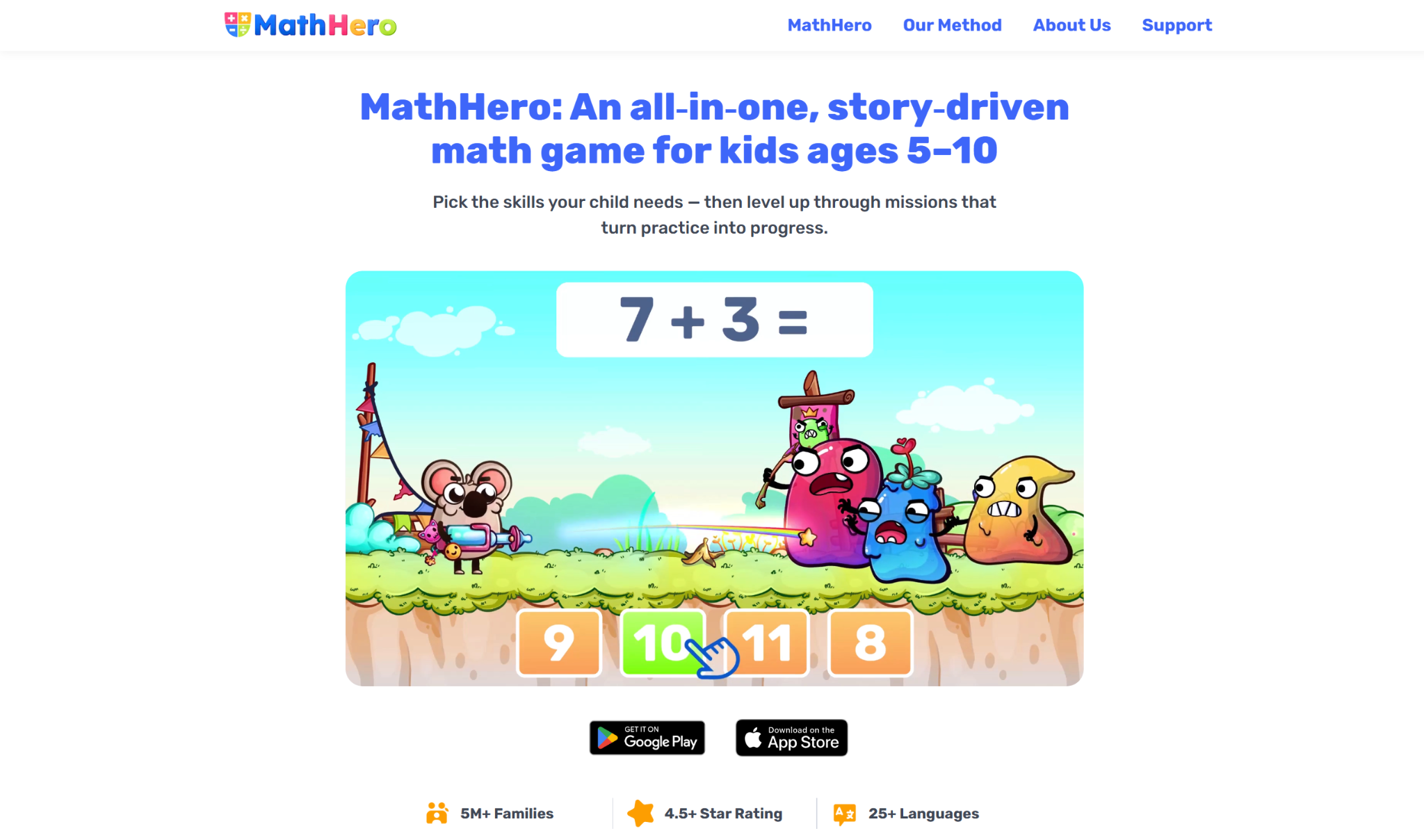
MathHero is a story-driven adventure for ages 5 to 10 covering addition, subtraction, times tables, and division, where solving math is the action mechanic. For reluctant learners, its defining strength is that kids choose to play.
Why it works for reluctant kids. The motivation is built into the game, not bolted on. The child plays for the story, the hero they own and customize, and the rewards they collect, and does the math to advance. Because the pull is the game, a reluctant child engages willingly, and the next session becomes their idea rather than yours. Parents describe exactly this shift, a child who resisted math starting to ask to play, often within a day or two, and doing far more arithmetic than they ever would on worksheets.
Early wins to rebuild willingness. For a child who has decided they are bad at math, you can set an easy level, slow the pace, and use multiple-choice answers so the first sessions are almost all wins. Success rebuilds willingness, and willingness is what a reluctant learner is missing. As confidence grows, turn the challenge up.
Honest limits. MathHero starts at first addition, not counting, and covers core arithmetic only, no fractions or geometry. New levels arrive slower than some kids want. For a reluctant learner in the 5 to 10 arithmetic range, though, it is the most direct route to willing practice. The whole game is completable free at five levels per day, no ads, no locked content, so you can watch a reluctant child engage before paying.
Ratings: Google Play 4.6 (46k) and App Store 4.7 (11k).
2. Prodigy Math: a world worth returning to
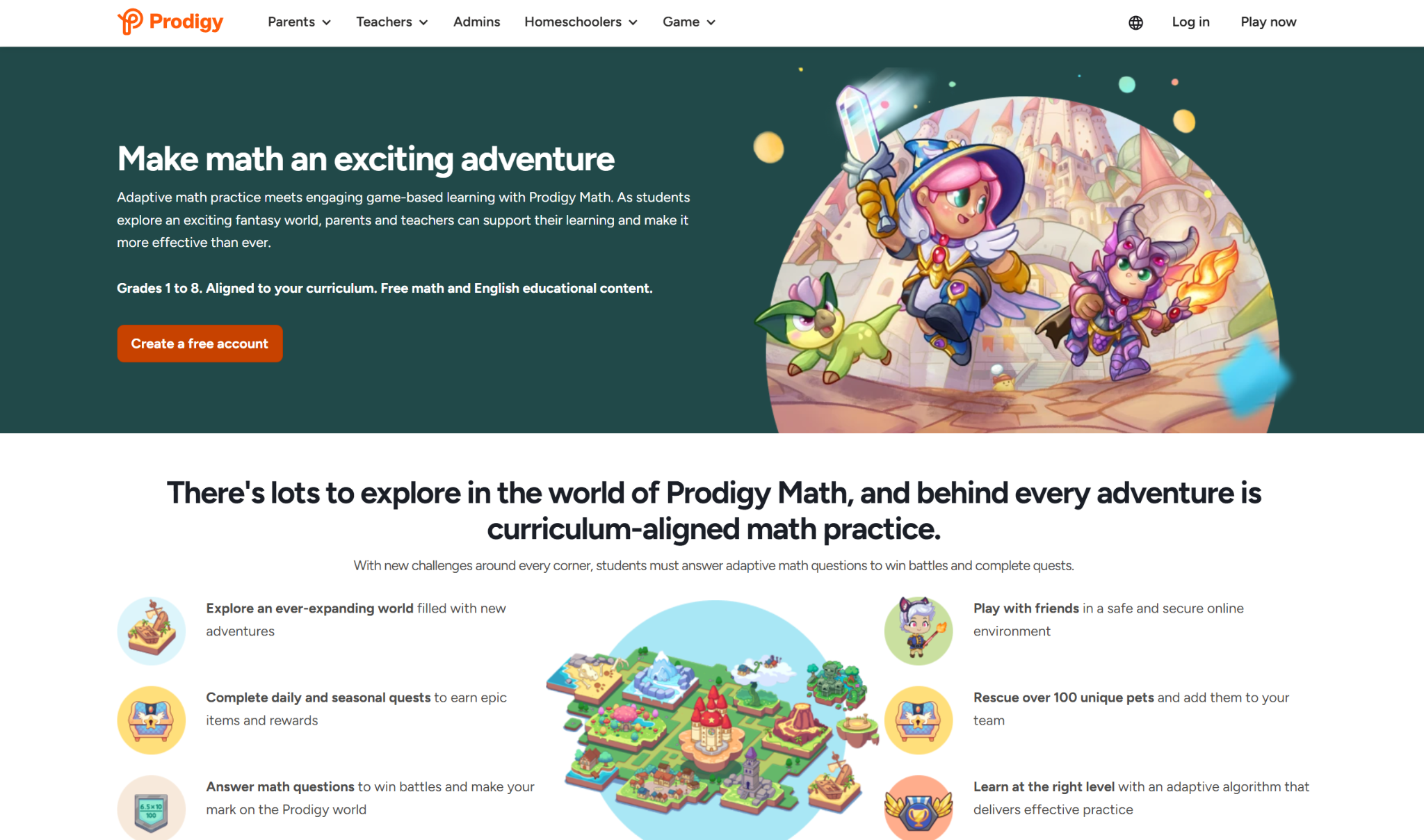
Prodigy Math is a fantasy based math game covering roughly 1st to 8th grade, where kids quest and battle by answering questions. For an older reluctant learner who loves role-playing games, the persistent world is a strong hook.
Why it works for reluctant kids. The ongoing adventure gives a game-loving child a reason to come back, and the math rides along with the questing. When the world grabs the child, the practice follows.
Where it falls short. Much of the motivating content is behind a paid membership, which can weaken the hook for a free player and turn into purchase requests. For the youngest reluctant kids, the world is a lot. Prices and tiers change, so check current pricing on Prodigy's site or in the app.
3. Monster Math 2: adventure that carries the practice
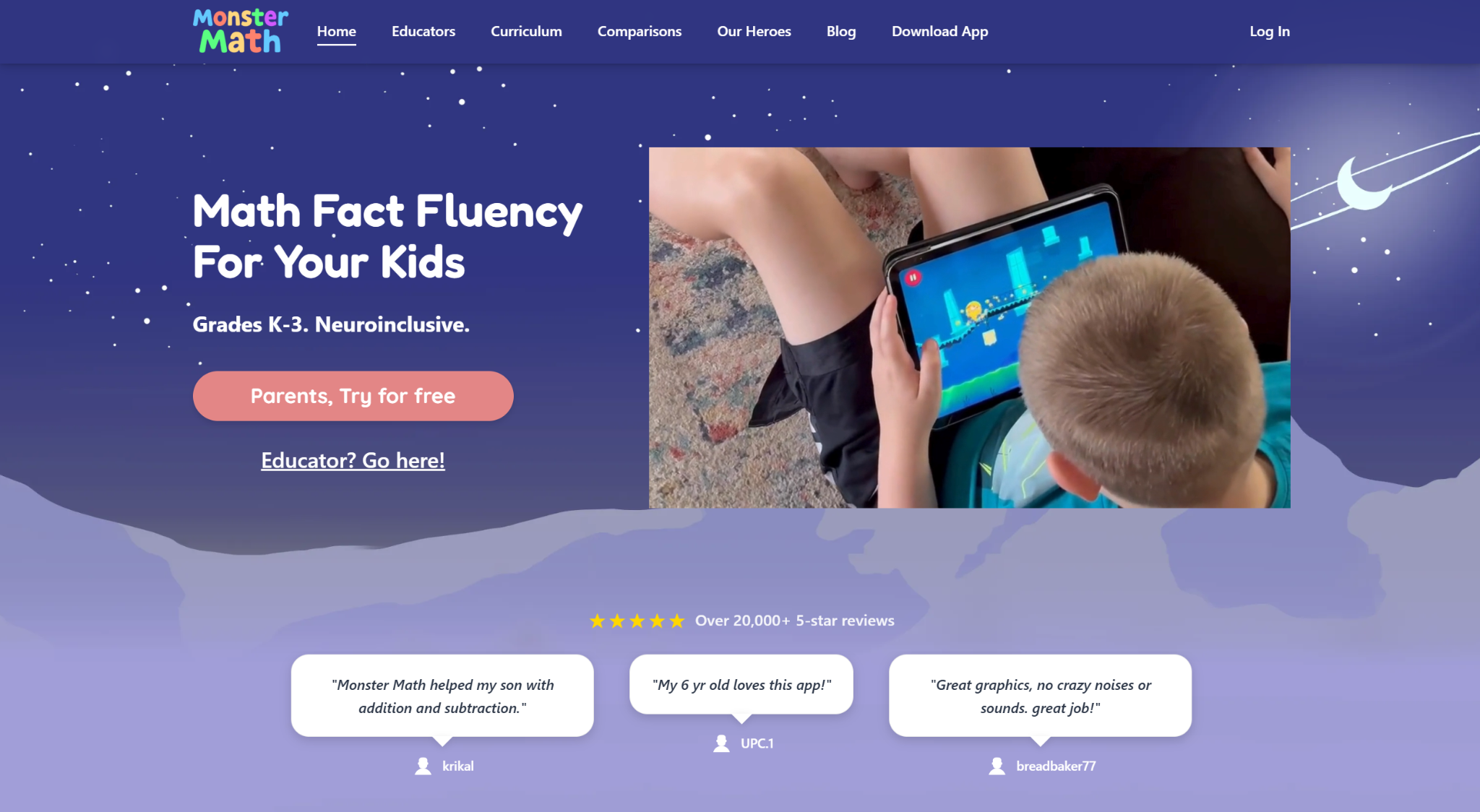
Monster Math 2 combines adventure gameplay with arithmetic practice, moving a child through a story where they solve problems to keep going. Selectable operations let you aim it at specific skills.
Why it works for reluctant kids. The adventure framing gives the math a purpose beyond a quiz screen, and the sense of progress pulls a reluctant child forward. Solving to advance feels different from solving for its own sake.
Where it falls short. Story depth varies by section, and some content requires a purchase. It is a solid hook for reluctant kids, though not as fully realized a world as the top picks. Confirm current pricing in the app.
4. SplashLearn: variety to fight boredom

SplashLearn offers a large library of games and worksheets for Pre-K through Grade 5, curriculum aligned. Its angle for reluctant kids is variety, many different mini-games so the format keeps changing.
Why it works for reluctant kids. A child who tires of one activity can switch to another, and the constant change fights the boredom that drives resistance. Breadth keeps things fresh.
Where it falls short. The rewards sit on top of exercises rather than inside a single story, so for some reluctant kids the underlying drill still shows through. Free access is limited; check current pricing in the app.
5. Marble Math Junior: play that feels like a toy
Marble Math Junior turns problems into a marble maze the child tilts and steers, so younger kids solve by moving rather than typing. The toy-like, physical play lowers resistance.
Why it works for reluctant kids. The game feels like play, not practice, which helps a young reluctant child engage without realizing they are doing math. The hands-on mechanic is inviting.
Where it falls short. It is lighter on story and long-term progression, so it works better as a way in for a young child than as a lasting practice engine.
How to turn a reluctant learner around
The app is the tool, but the approach seals it.
Start with wins, not challenge
Set the difficulty low enough that your child succeeds from the start. A reluctant child needs to feel capable before they will engage, so stack the early sessions with wins and raise the bar only once they are hooked.
Hand over control
The goal is a child who chooses to practice, so let them. Give them the device, let them play, and resist hovering or turning it into supervised homework. Ownership is what converts a reluctant child into a willing one.
Keep it short so it stays wanted
End sessions while the child still wants more. A short, enjoyable session leaves a reluctant child ready to come back, where a long one confirms that math is a slog. Short and frequent protects the willingness.
Do not bribe over the top
If the game already motivates, adding your own big rewards for practicing can replace the child's growing interest with a transaction. Let the game do the motivating, and keep your role light.
Frequently asked questions
How do I get my reluctant child to practice math?
Give them something they will choose to do. A game where math is how you play, like MathHero, converts reluctant practice into willing practice, because the child engages for the game. Start easy so they win early, hand over control, and let the next session be their idea.
Why does my child resist math but not other subjects?
Often a child has decided they are bad at math, or finds bare practice boring, or sees no immediate payoff. A game addresses all three: early wins rebuild the sense of capability, the play fights boredom, and in-game rewards provide the immediate payoff a worksheet lacks.
Will a game actually build skills, or just entertain?
A well-designed math game is real practice, because the math is how you play. A reluctant child ends up doing far more arithmetic willingly than they would on worksheets, and that volume of practice builds genuine skill. Entertainment is the delivery, the practice is real.
How long until I see a change?
Many parents report a reluctant child starting to engage within days once the app clicks, though every child differs. The first sign is the child choosing to play without a push. Give a free version a week or two and watch whether the willingness appears.
What not to do with a reluctant learner
Some well-meant moves make reluctance worse. Steering around them matters as much as choosing the right app.
Do not pile on more of what they resist
The instinct to respond to resistance with more worksheets, more drills, more required practice usually backfires. A reluctant child digs in harder against more of the thing they already avoid. The answer is a different form, a game they will choose, not a larger dose of what is not working.
Do not turn it into a battle
Making practice a daily fight teaches a child that math is a site of conflict, which deepens the resistance. Every forced session confirms that math is something to resist. Lowering the temperature, and letting an engaging app carry the practice, breaks that pattern better than insistence.
Do not shame the reluctance
Telling a child they are lazy or should try harder attaches shame to math, which fuels avoidance. Reluctance is usually rooted in feeling incapable or bored, not in laziness. Addressing those roots, with early wins and genuine engagement, works where shame only wounds.
Do not give up on willingness
It is tempting to conclude that a reluctant child will simply never like math, and to settle for forced practice forever. But parents routinely see reluctance reverse once the right app clicks. Willingness is achievable, and reaching for it beats resigning yourself to a permanent standoff.
Signs your reluctant learner is turning the corner
Once you start using the right app, watch for these signals that reluctance is giving way to willingness.
They stop negotiating
A reluctant child negotiates: five more minutes, do it later, do less. When the negotiating fades and your child simply starts a session, the resistance is lifting. The absence of the daily haggle is one of the first signs the app is working.
They start it themselves
The clearest signal of all: your child opens the app without being told. When the next session becomes their idea rather than yours, you have crossed from reluctant to willing, which is the whole goal.
They mention it unprompted
A child who talks about their hero, their progress, or what they are trying to unlock has become invested. That investment, showing up in conversation outside of practice, means the child cares about the game and, along with it, is doing the math.
The mood around math lifts
Reluctance carries a mood: sighs, groans, dread. When that mood lightens, when math stops being a source of tension, the reluctance is genuinely easing. A calmer mood around math is a deeper sign than any single behavior.
The bottom line
A reluctant learner does not need more pushing, they need something they will choose to do. For ages 5 to 10, MathHero embeds math in a game kids want to play, so a reluctant child practices willingly and the daily standoff ends. Prodigy, Monster Math 2, SplashLearn, and Marble Math Junior offer other hooks for different ages. Start with easy wins, hand over control, keep it short, and let the next session become your child's idea. That shift, from your idea to theirs, is the whole win.